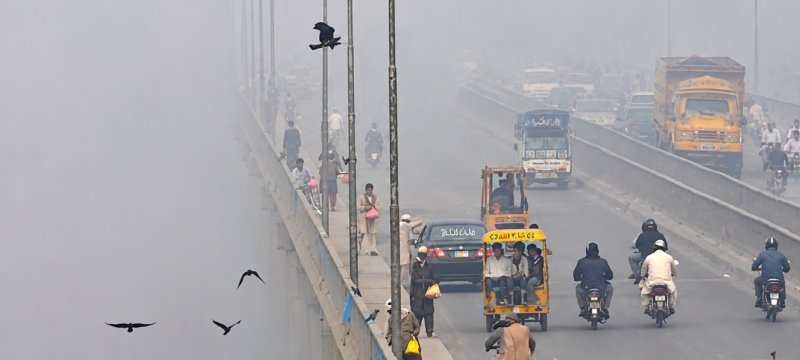
Air pollution has intensified across several cities in Punjab, with extremely high Air Quality Index (AQI) readings raising concerns about public health as Pakistan faces another severe smog episode.
According to reported air quality monitoring figures, Nankana Sahib recorded an alarming AQI of 685, while Dera Ghazi Khan registered 611. Jhang also reported a reading of 498, indicating serious pollution conditions across different parts of the province.
Lahore’s air quality remained unhealthy, with its reported AQI reaching 292. The provincial capital continued to face heavy smog, affecting visibility and increasing concerns about respiratory health.
Other affected cities included Multan, Gujranwala and Faisalabad, where reported AQI readings stood at 301, 296 and 294, respectively.
The reported figures highlight the growing air pollution problem in Punjab, although readings can fluctuate throughout the day depending on weather conditions, monitoring locations and measurement methods.
The city-wise figures are listed below:
| City | Reported AQI |
|---|---|
| Nankana Sahib | 685 |
| Dera Ghazi Khan | 611 |
| Jhang | 498 |
| Multan | 301 |
| Gujranwala | 296 |
| Faisalabad | 294 |
| Lahore | 292 |
The worsening pollution comes as India celebrates Diwali on November 8, with fireworks expected to add to existing air quality problems across northern India.
Firecrackers release smoke, fine particulate matter and other harmful substances into the atmosphere. These emissions can cause temporary pollution spikes, particularly when weather conditions prevent pollutants from dispersing.
Pakistan’s Punjab and northern India share a regional atmospheric environment. Depending on wind direction and weather patterns, airborne pollutants can travel across national borders and affect neighbouring areas.
However, the extent to which Diwali fireworks have contributed to the latest pollution readings in Pakistani cities has not been independently established. The contribution of cross-border pollution would require detailed atmospheric monitoring and scientific analysis.
A Reuters report published on November 3 highlighted worsening air quality in Lahore and Delhi, identifying vehicle emissions, construction activities and agricultural waste burning among the major contributors to regional pollution.
The report also noted that fireworks during Diwali could further deteriorate air quality in northern India, where winter conditions frequently trap harmful emissions close to the ground.
Weather conditions play an important role in the development of seasonal smog. Low wind speeds, falling temperatures and limited atmospheric movement can prevent pollutants from dispersing, allowing harmful particles to accumulate.
Meanwhile, India’s capital, New Delhi, also experienced severe pollution ahead of Diwali.
According to IQAir’s live ranking on November 7, Delhi recorded a US AQI of 581 at approximately 10:35 AM, placing it at the top of the world’s most polluted major cities at that time.
India’s Central Pollution Control Board reported a separate AQI reading of 363 around 10:00 AM. The difference reflects the distinct measurement systems and calculation methods used by the two monitoring organisations.
Indian authorities introduced precautionary measures ahead of the festival, including online learning arrangements for schools in and around Delhi. Residents were also encouraged to work from home to reduce exposure to polluted outdoor air.
The deteriorating air quality has increased concerns about respiratory and cardiovascular health across the region.
Fine particulate matter, particularly PM2.5, is a major health concern because its tiny particles can penetrate deep into the lungs and enter the bloodstream.
Exposure to polluted air can cause breathing difficulties, coughing, throat irritation and worsening symptoms among people with existing respiratory conditions.
Children, older adults and individuals with asthma or other lung and heart conditions are particularly vulnerable during severe smog episodes.
Health authorities generally advise people to avoid unnecessary outdoor activities when air pollution reaches dangerous levels. Residents who must go outside can reduce exposure by wearing properly fitted N95 or equivalent particulate-filtering masks.
Keeping doors and windows closed during periods of severe outdoor pollution and using indoor air filtration, where available, may also help limit exposure.
The latest pollution figures highlight the need for stronger environmental controls across Punjab. Vehicle emissions, industrial smoke, construction dust and agricultural residue burning remain important challenges for authorities.
Although pollutants can travel across borders, reducing local emissions is equally important for improving air quality.
In other news read more about: Lahore Once Again Tops Global Pollution Ranking as AQI Hits 355
The situation also underlines the importance of reliable monitoring systems and coordinated environmental measures to protect residents as winter smog continues to affect the region.