

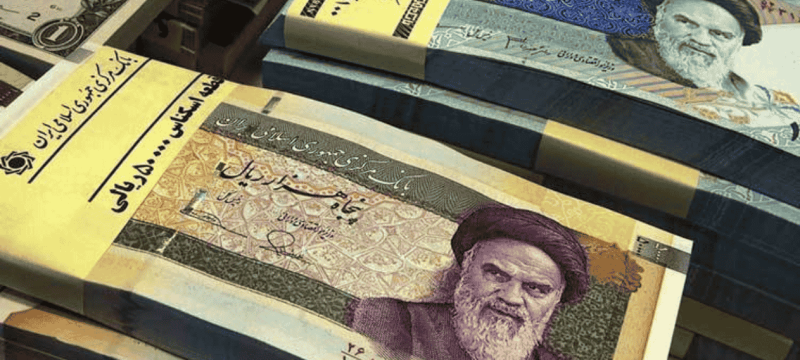
The Iranian Rial Rate has shown a notable increase in Pakistan’s informal currency markets. Fresh data from licensed dealers highlights stronger trading activity across major cities.
In today’s market, one crore Iranian rials is trading between PKR 8,000 and PKR 10,000. This pricing is seen in Karachi, Lahore, and Quetta exchange networks. The movement reflects active demand in cross-border financial settlements.
The Iranian Rial Rate continues to show divergence from global benchmarks. Market sources estimate an informal conversion of around 1 PKR equal to 1,000 IRR. This differs sharply from the international mid-market reference level.
Globally, 1 PKR is valued at about 4,738 IRR. This gap shows a major premium in Pakistan’s informal trading system. Dealers link this difference to regional trade needs and limited banking channels.
The Iranian Rial Rate has also increased weekly in local markets. Earlier estimates ranged from PKR 6,500 to PKR 8,500 per crore rials. Now it has moved up to PKR 8,000–10,000. This reflects a 15% to 25% rise in short-term activity.
Market analysts say demand is driven by border trade along Balochistan. Remittance flows and short-term speculation also play a role. Limited formal settlement options continue to support informal trading.
Daily volume is estimated at $4 to $6 million equivalent. Most transactions occur through dealer networks and cash-based exchanges. Participants often rely on real-time quotations from local dealers.
Authorities advise caution when using informal exchange channels. They recommend verifying rates through authorized exchange companies. These include State Bank of Pakistan-approved dealers and ECAP members.
The Iranian Rial Rate remains sensitive to regional trade conditions. It also reacts quickly to liquidity changes in border markets.
The Iranian rial is Iran’s official currency and is managed by its central bank. It has faced long-term pressure due to inflation and sanctions. The Pakistani rupee is issued by the State Bank of Pakistan and reflects domestic economic trends.
Both currencies are influenced by trade flows and regional stability. Market observers expect continued fluctuations in the coming days.
In other news read more about: Iranian Rial Sees Strong Demand in Pakistan Informal Market