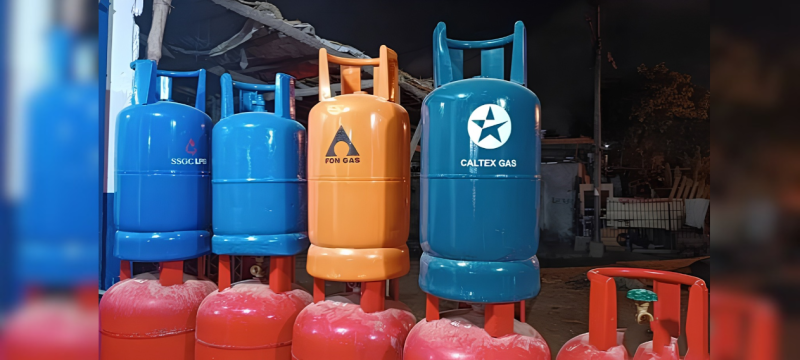
ISLAMABAD: The federal government has proposed new regulations to improve LPG safety, control undocumented imports, and strengthen quality standards across Pakistan.
The proposed reforms aim to address illegal imports, unsafe transportation, and poor safety practices in the gas supply chain.
According to a Cabinet summary, authorities have identified several problems affecting the country’s liquefied petroleum gas sector.
These include inadequate testing facilities, unregistered transport vehicles, and unsafe cylinder-filling practices.
Government Raises Concerns Over Undocumented Imports
The Cabinet document estimates that more than 50 percent of Pakistan’s gas supply enters through land border crossings.
However, these entry points currently lack proper facilities to test the quality of imported gas.
Inspections conducted by OGRA and the Hydrocarbon Development Institute of Pakistan (HDIP) at Taftan reportedly identified substandard products.
The government also expressed concerns about undocumented imports entering the country without proper monitoring.
Such imports avoid sales tax, petroleum levy, and customs duties, causing potential revenue losses.
Authorities also lack accurate information about the quantities entering Pakistan through informal trade routes.
Unsafe Gas Handling Linked to Over 60 Deaths
The proposed reforms highlight serious safety concerns involving gas transportation and handling.
According to the Cabinet summary, unsafe gas transfers at border crossings have contributed to repeated explosions.
These incidents have reportedly claimed more than 60 lives since 2020.
The document also estimates that approximately 56 percent of gas transportation bowsers operate without proper licences.
Around 2,000 bowsers currently operate across Pakistan.
However, only about 800 reportedly meet the required OGRA and National Energy and Power Safety Authority (NEPSA) standards.
New Quality Testing Rules Proposed for June 2027
Under the proposed framework, OGRA will introduce quality testing at land entry points through HDIP.
The government has set June 30, 2027, as the proposed deadline for establishing these facilities.
The plan also includes NEPSA satellite offices and HDIP/PCSIR laboratories at border crossings.
After the deadline, imported LPG shipments would require spot testing before entering the country.
Authorities also plan to monitor licensed companies more closely.
OGRA would compare reported sales volumes with storage capacity, cylinder circulation, and filling operations.
Companies violating regulations could face financial penalties, licence suspension, or cancellation.
Stricter Rules for Gas Cylinders and Transportation
The proposed guidelines would restrict cylinder filling to officially licensed plants.
Transfers between gas transportation bowsers would also be prohibited.
The government plans to introduce stronger cylinder identification standards through embossing and barcoding.
Unregistered empty cylinders would be banned, while manufacturers would undergo periodic requalification.
The proposed measures aim to reduce accidents caused by unsafe equipment and handling practices.
Authorities have also suggested increasing legal penalties for safety violations.
Amendments to Sections 285 and 286 of the Pakistan Penal Code would make relevant offences non-bailable.
Government Provides Transition Period for Transporters
The proposed framework includes a transition period for operators using non-compliant transportation bowsers.
Enforcement action against these vehicles would remain suspended until June 30, 2027.
This period would allow transporters to upgrade their equipment and meet regulatory requirements.
Meanwhile, OGRA and Federal Board of Revenue Customs would jointly monitor undocumented imports.
Regular inspections and safety audits would also be introduced across the supply chain.
Government Focuses on Winter Gas Supply
The Petroleum Division has highlighted the importance of maintaining uninterrupted gas imports ahead of winter.
Households relying on cylinders could face additional difficulties if piped gas supplies remain limited.
The government also warned that geopolitical tensions have increased risks to international energy supply chains.
Under the proposed framework, OGRA could review import plans, available stocks, and expected winter demand.
State-owned importers and marketing companies could also be directed to arrange additional supplies when necessary.
In other news read more about LPG Prices Skyrocket as Open Market Rate Surges to Rs. 630 Per KG in Pakistan!
The proposed LPG reforms aim to improve public safety while maintaining reliable gas availability across Pakistan.
However, the measures remain proposals and would require the necessary approvals and implementation.