


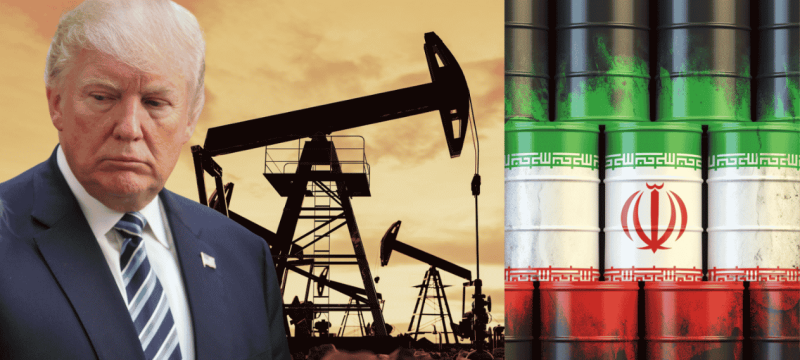
Global oil markets witnessed sharp gains on Monday after Trump rejects Iran’s response to a US peace proposal. Rising tensions in the Middle East also increased concerns about the security of the Strait of Hormuz.
Reports showed that Brent crude prices climbed above $104 per barrel. Meanwhile, West Texas Intermediate (WTI) crude reached nearly $99 per barrel. Both benchmarks recorded gains of more than three percent.
Analysts said the latest increase came after Trump rejects the Iranian response sent through diplomatic channels. Investors are now worried about possible disruptions in oil supply routes.
Since the conflict began, Brent crude prices have increased by almost $20 per barrel. The sharp rise reflects growing uncertainty in global energy markets.
US President Donald Trump reacted strongly after reviewing Iran’s latest message. In a statement shared on Truth Social, Trump said he completely disagreed with Iran’s response.
The statement became a major topic in international discussions after Trump rejects the proposal and described it as “totally unacceptable.” His remarks quickly affected investor confidence and market stability.
Iran had earlier submitted its official response to Washington through Pakistani mediators. According to reports, the communication was aimed at reducing tensions and achieving a ceasefire in the region.
Iranian state media confirmed that Tehran conveyed its position through Pakistani intermediaries. However, officials did not publicly share details of the proposal or Iran’s reply.
Current diplomatic efforts are mainly focused on reducing military tensions and securing a ceasefire. Broader political and security issues may be discussed during future negotiations.
The situation remains sensitive because of increasing military tensions involving Iran, the United States, and Israel. Global powers are continuing diplomatic efforts to avoid further escalation.
Market experts believe uncertainty surrounding the Strait of Hormuz is also contributing to rising oil prices. The waterway is considered one of the world’s most important routes for global oil shipments.
Energy traders are closely monitoring developments in the Middle East. Any disruption in the region could affect international fuel prices and global supply chains.
The latest market reaction highlights how geopolitical tensions continue to influence the global economy. The strong response after Trump rejects Iran’s proposal has added fresh uncertainty to already volatile energy markets.
Analysts warn that oil prices may remain unstable until diplomatic progress is achieved and regional tensions begin to ease.
In other news read more about: Oil Prices Rise as US-Iran Tensions Worry Investors