


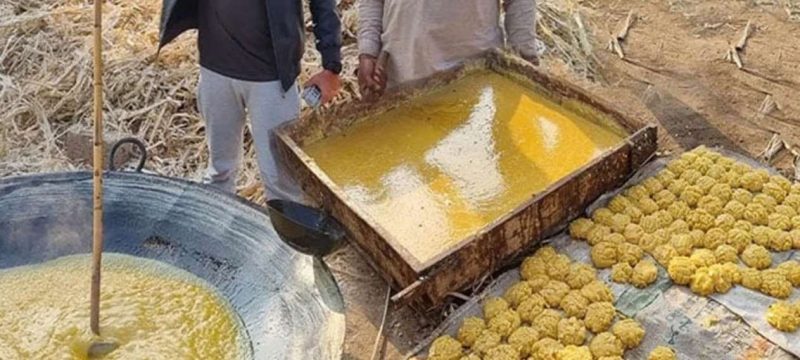
As winter approaches across Pakistan, jaggery returns to kitchens, from tea to traditional sweets. Experts say it offers some advantages over white sugar, but moderation is important.
Jaggery is a natural sweetener made from sugarcane juice and has been used in Pakistan for centuries. It is commonly added to halwas, kheer, sweets, and even tea, especially during colder months. Its use increases in winter due to beliefs that it helps the body cope with seasonal illnesses such as colds, flu, and coughs.
Nutritionists note that jaggery contains some essential nutrients, including vitamins B1, B2, B6, vitamin C, iron, magnesium, potassium, and calcium. It is less processed than refined sugar, which makes it slightly more nutritious. However, both jaggery and sugar are largely made of sucrose and have similar calorie content.
Plain jaggery contains around 380–390 calories per 100 grams. Experts say it raises blood sugar levels more slowly than sugar but still affects glucose levels. People with diabetes are advised to consume it in moderation.
The popularity of jaggery in winter is also linked to its natural warming properties. Experts say it can support immunity, improve hemoglobin levels, aid digestion, and provide relief from sore throats or coughs when used in small quantities.
Key benefits of jaggery include providing essential minerals and vitamins, supporting digestion, helping cleanse the liver, boosting immunity, and offering instant energy.
Despite its advantages, overconsumption can lead to weight gain and elevated blood sugar. Nutritionists caution that jaggery should not be seen as a full substitute for sugar. Its milder sweetness can lead people to use larger amounts, reducing its benefits.
In other news read more about: https://newsguru.pk/lifestyle/gta-6-release-set-for-november-19-2026/
Experts recommend using jaggery in small amounts as a replacement for sugar. Diabetic patients and those monitoring calories should remain particularly careful.