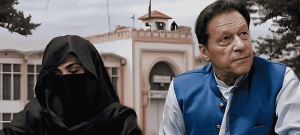
When we think of Afghanistan, we think of a few words: oppression, hyper-religiosity, unfair gender norms, instability. Much like how the world views Pakistan, pretty much. But just as we see our culture as so much more than the grievances it causes, as we are attached to our poetry, our land and our vibrancy, we fail to perceive Afghanistan without the cloak of hyper-religiosity.
Just as women in Pakistan wear beautiful light chikankari, intricate embellished lawn and blood-bright khaddar, and the men in southern Punjab rival peacocks in their bright shalwar kameez, we fail to separate the shuttlecock burqa from Afghanistan.
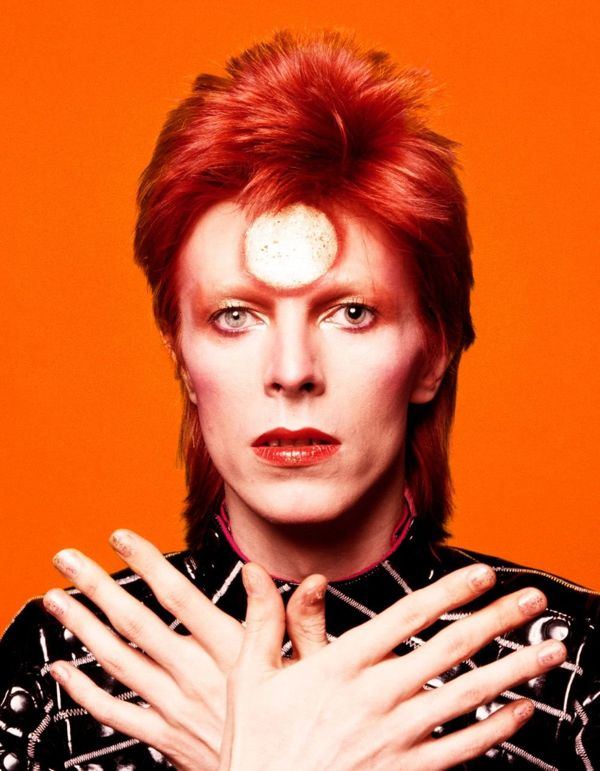
David Bowie remains a symbol of flamboyance and fluidity of expression, defying male gender norms. These boys in a remote region of eastern Afghanistan channel that same natural fluidity, without any access to the internet, proving that we all have vibrant souls we tamp down because of external pressure.
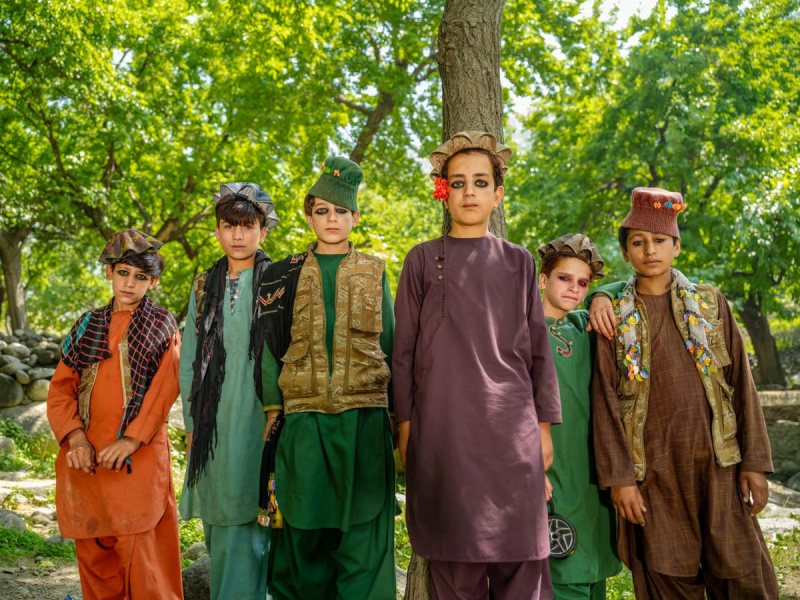
Afghan-American photographer Daniel Malikyar shared photographs of boys from a remote mountain village, describing it as “a fashion subculture unlike anything I’ve encountered before”. In his book, he places the village in the eastern mountains of Afghanistan, home to the Pashai, a minority ethnic group with its own language and cultural identity.
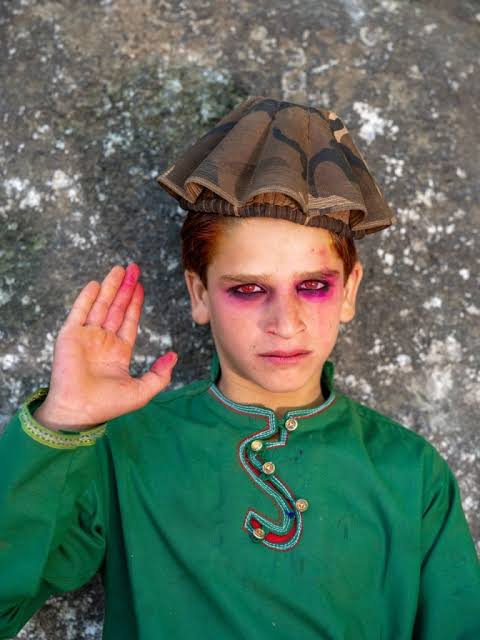
“I met a group of boys in a remote village who had developed their own distinct sense of style. They wore colorful eyeliner called surma, painted their fingernails with henna, and dressed in embroidered clothing and handmade hats decorated with flowers and butterfly clips.
This wasn’t something they dressed up for. It was how they dressed every day, each with their own unique interpretation of style and self-expression.
With no access to the internet and limited resources, they had created something entirely their own.”
Is This Traditional Dress or a Fashion Subculture?
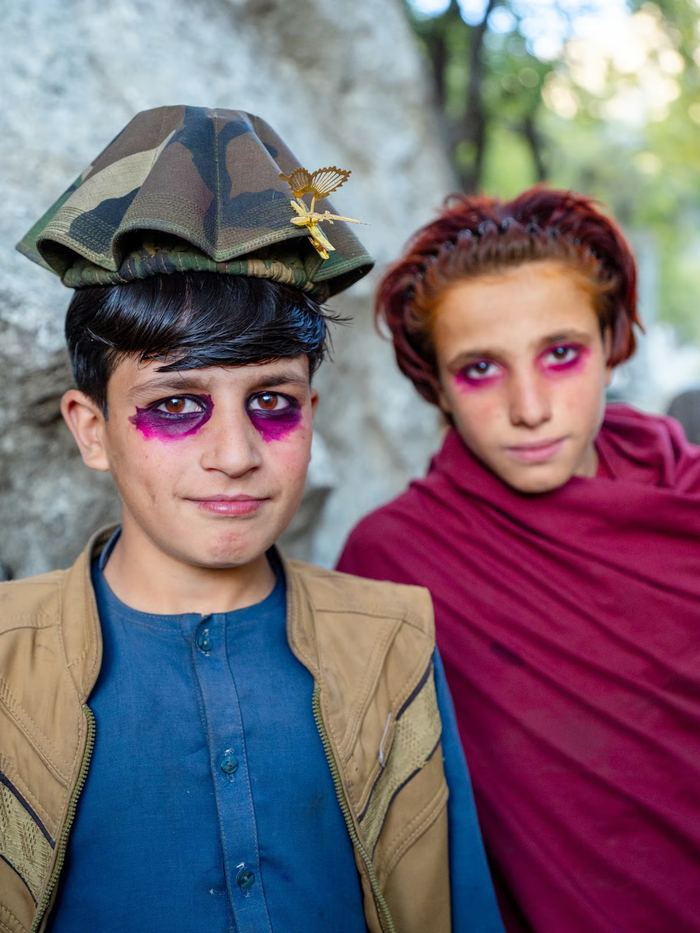
It is worth noting that this is not traditional dress; it is a subculture of fashion. These boys are deliberately expressing their individuality and creativity with their glowing eyes framed by surma and kajal, their DIY hats and their colour-blocked clothes. Louis Vuitton is sure to steal their charisma.
What About the Bacha Bazi Concerns?
Many netizens expressed concern about the rampant bacha bazi (the sexual abuse of boys) in Afghanistan, and the concern is not baseless: the European Parliament has described the practice as child sexual abuse that is prevalent in several Afghan provinces, with boys bought or kidnapped from poor families. But the photographer himself clarified that he saw nothing pointing in that direction. Talks with the village elders, he reported, found them unbothered by the boys’ style, which they saw as part of a “style that they like which has evolved over time.” He said: “(it) is nothing like that, they are guys who put together their own fashion with what they have on hand, they are the pashai boys, and it’s very cute what they do they are not victims they are just teenagers who mark their own style.”
What Do the Surma Boys Teach Us?
The spirit of David Bowie is alive and well, tucked away in the mountains of eastern Afghanistan, reminding us that people are so much more than what they are perceived to be, and so much more than what is imposed on them.
Sources
- The Surma Boys of Afghanistan (Kottke, Nov 2026)
- Against the grain: A fashion subculture in Afghanistan (Dazed MENA, 19 Dec 2024)
- Daniel Malikyar’s Portrait of Afghanistan (Aesthetica Magazine)
- Afghanistan is breathtakingly beautiful through the lens of a refugee’s son (HTV via Vietnam.vn)
- Daniel Malikyar’s Afghanistan in Color (Blind Magazine)
- Resolution on Afghanistan, notably the allegations of sexual abuse of boys in the Logar Province (European Parliament, 19 Dec 2019)