


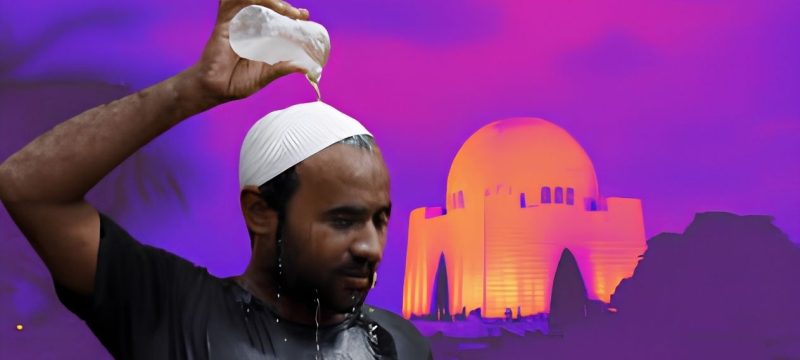
KARACHI: Health experts Warn Karachi is facing a growing heat challenge that could develop into a serious public health crisis if immediate steps are not taken. Rising temperatures, rapid urban growth, and environmental changes are making the city increasingly vulnerable to extreme heat.
Prof Zafar Fatmi, head of Environmental Occupational Health and Climate Change at Aga Khan University’s Department of Community Health Sciences, said Karachi’s urban heat problem is becoming more severe. He explained that both climate change and unplanned urban expansion are contributing to the situation.
According to the expert, the city is absorbing and retaining more heat because of expanding concrete structures, dense construction, traffic congestion, and the steady loss of green spaces. The reduction of trees and vegetation has also increased surface temperatures in many parts of the city.
Recent research highlights the scale of the problem. A 2026 study comparing major cities found that Karachi recorded the highest urban-rural temperature difference in Pakistan, reaching around 4.5 degrees Celsius. Researchers linked this trend to vegetation loss and increasing land surface temperatures.
Experts Warn Karachi residents that actual temperatures at street level can be much higher than official weather readings. Outdoor workers often experience more intense heat exposure, especially under direct sunlight.
Studies showed that delivery riders and rickshaw drivers face significantly higher temperatures during working hours. These conditions increase health risks and reduce productivity.
Prof Fatmi said warning signs are already becoming visible across the city. Many people are reporting dehydration, headaches, dizziness, fatigue, poor sleep, and even fainting episodes during hot weather.
The risks are especially high for children, older adults, pregnant women, and outdoor workers. Traffic police, construction laborers, vendors, delivery riders, and people living in poorly ventilated homes are among the most vulnerable groups. Individuals with heart disease, diabetes, kidney conditions, lung diseases, and high blood pressure face additional health threats.
The expert also noted that heat becomes more dangerous when combined with Karachi’s air pollution. Traffic-heavy and dusty areas expose residents to both hazards at the same time, increasing pressure on the lungs and heart.
Health experts Warn Karachi that rising temperatures may also increase the spread of infections. Hot conditions can encourage mosquito breeding, food spoilage, unsafe water storage, and contamination in areas with poor sanitation.
Prof Fatmi called for a comprehensive heat-health action plan. He suggested public heat alerts, shaded bus stops, drinking water stations, cooling centers, and stronger hospital preparedness. He also stressed the need to protect trees, expand green spaces, improve public transport, and reduce unnecessary concrete development.
In other news read more about Karachi Hill Park Land Dispute Investigation Sees Major Breakthrough
He warned that without coordinated action, extreme heat will continue to affect public health, economic productivity, and the daily lives of Karachi residents.