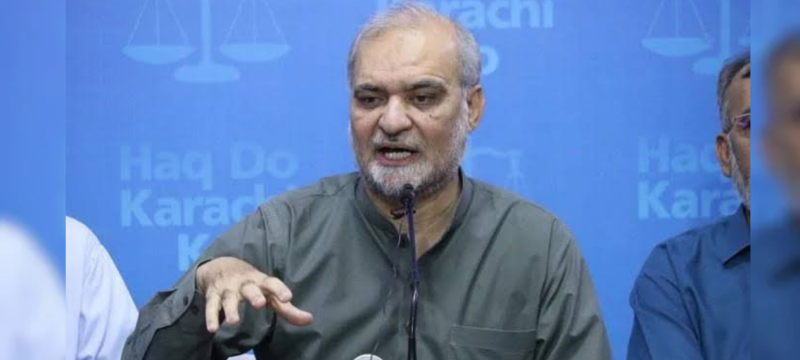
LAHORE: Jamaat-e-Islami (JI) Pakistan chief Hafiz Naeemur Rehman has condemned recent police encounters that resulted in the deaths of suspects. He described the incidents as extrajudicial killings and questioned the country’s justice system.
Speaking at a news conference in Lahore on Monday, Hafiz Naeem discussed two cases involving Laiba Ijaz and 15-year-old orphan Waseem Abbas. Laiba is a gold medallist from the International Islamic University Islamabad (IIUI).
He said suspects linked to both cases were killed in police encounters instead of facing trial in court. According to him, these incidents raised serious concerns about the rule of law and accountability.
Hafiz Naeem alleged that killing suspects could prevent investigators from identifying other people involved in the crimes. He claimed that influential individuals might be protected when suspects die before facing legal proceedings.
He said such incidents reflected a growing lack of accountability across the country. He also argued that extrajudicial killings could increase public anger instead of addressing people’s concerns.
Hafiz Naeem Raises Concerns Over Laiba Ijaz Case
Discussing the Laiba Ijaz case, the JI chief questioned whether the suspect had acted alone. He suggested that investigators should identify everyone involved rather than allowing the case to end with one suspect’s death.
He maintained that the authorities must follow legal procedures to establish responsibility. He also stressed the importance of transparent investigations in serious criminal cases.
The incident has raised questions about whether the justice system can hold all responsible individuals accountable. Hafiz Naeem called for an approach that ensures justice through courts rather than police encounters.
Waseem Abbas Case Highlights Accountability Concerns
Referring to the death of 15-year-old orphan Waseem Abbas, Hafiz Naeem linked the case to wider social problems. He pointed to feudal influence, capitalism, and the power of influential individuals.
He alleged that connections with powerful people and government officials allowed some individuals to avoid accountability. He also criticised groups operating in different economic sectors.
These included the flour, sugar, banking, oil marketing, and land sectors. He accused powerful groups of benefiting from a system that often disadvantages ordinary citizens.
However, he argued that police encounters alone could not resolve these wider problems. He called for stronger judicial institutions and effective legal procedures.
JI Chief Questions Government Policies
Hafiz Naeem also criticised the government’s economic policies and called for reduced government spending. He alleged that banks and refineries were working against the interests of ordinary citizens.
He also questioned the government’s progress towards ending interest-based financial practices. He referred to the January 1, 2027, deadline for meeting the country’s constitutional commitment.
The JI chief said the government needed to demonstrate progress on this issue. He also called for policies that address the financial difficulties faced by ordinary people.
Jamaat-e-Islami Announces Possible Long March
Hafiz Naeem warned that Jamaat-e-Islami could organise a long march in mid-November. He said the party would take this step if the government failed to abolish the petroleum levy.
The announcement adds to the party’s criticism of the government’s economic decisions. The proposed protest would focus on the petroleum levy and the party’s demands.
Overall, Hafiz Naeem called for judicial accountability, economic reforms, and measures to protect public interests. He maintained that criminal cases must be resolved through legal proceedings.
In other news read more about JI Announces Third Phase of Long March Against Petroleum Levy From Oct 23
His remarks placed renewed attention on police encounters, the rule of law, and the need for an effective justice system in Pakistan.