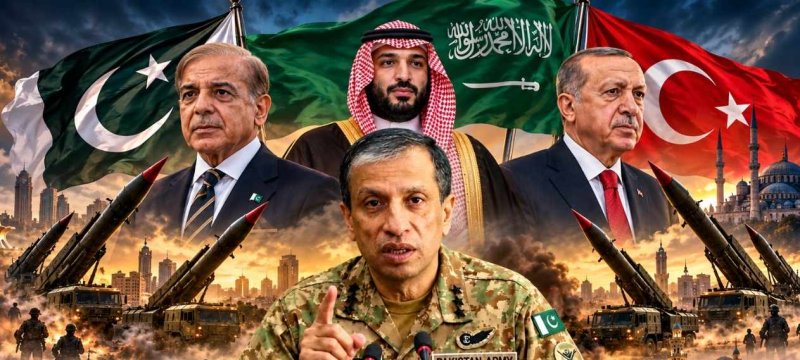
ISLAMABAD: Pakistan’s military spokesperson, Lieutenant General Ahmed Sharif Chaudhry, has called for a negotiated settlement to the Middle East conflict. He warned that the Makkah Alliance’s collective deterrence mechanism could come into play if diplomatic efforts fail.
In an interview with Saudi-based broadcaster Independent Arabia, the Director General of Inter-Services Public Relations (DG ISPR) stressed the need to prevent further military escalation.
Chaudhry said expanding the conflict would not benefit the countries involved. He urged regional states to pursue dialogue and avoid actions that could widen the fighting.
He also reaffirmed Pakistan’s commitment to Saudi Arabia’s security and the protection of the two holy mosques in Makkah and Madinah.
DG ISPR Calls for Dialogue to Prevent Regional Escalation
Chaudhry emphasised that negotiations remain the preferred way to address the ongoing crisis. He said Pakistan has been communicating with regional parties to reduce tensions.
The military spokesperson maintained that no country would benefit from further escalation. He urged Muslim countries to strengthen unity and cooperation instead of allowing conflicts to spread.
His remarks come amid heightened regional tensions and questions about Pakistan’s role as a diplomatic mediator.
Pakistan has previously expressed support for a peaceful outcome to the conflict. Its position also includes opposition to attacks that threaten regional security and stability.
What Is the Makkah Joint Defence Agreement?
Pakistan, Saudi Arabia and Türkiye signed the Makkah Joint Defence Agreement on August 7, 2026.
The agreement aims to strengthen collective security, improve defence cooperation and deter potential aggression. It states that an armed attack against any one of the three countries will be regarded as an attack against all three.
The participating countries have described the arrangement as defensive in nature. Pakistan’s Foreign Office has also said the agreement is not directed against any specific country.
The pact provides a framework for closer security coordination among the three countries. However, its practical implementation depends on the arrangements and decisions made by the participating states.
Alliance Could Come Into Play if Negotiations Fail
Chaudhry warned that the alliance’s collective deterrence mechanism could become relevant if negotiations fail and the conflict turns into a wider military confrontation.
His comments highlight the balance Pakistan is seeking between diplomatic engagement and its defence commitments to Saudi Arabia.
The warning does not, by itself, confirm that a new military operation has been ordered. It indicates that the alliance’s collective security framework could be activated under the circumstances described by the spokesperson.
The agreement’s stated purpose is to strengthen deterrence and protect the security and territorial integrity of its members.
Pakistan Reaffirms Commitment to Saudi Arabia’s Security
The DG ISPR also stressed the importance of Saudi Arabia’s sovereignty and territorial integrity.
He said protecting the Haramain Sharifain, the two holy mosques in Makkah and Madinah, remains a major priority for Pakistan.
Chaudhry referred to Pakistan’s existing security commitments and the position communicated by the country’s political and military leadership.
The agreement between Pakistan, Saudi Arabia and Türkiye provides a framework for collective defence cooperation. The three countries have also discussed ways to improve coordination in response to regional security threats.
Makkah Alliance Committee Discusses Defence Cooperation
The Strategic Political and Defence Committee established under the Makkah agreement met in Riyadh on October 5, 2026.
According to Pakistan’s Foreign Office, the meeting reviewed regional security developments and threats facing Saudi Arabia. Representatives from Pakistan, Saudi Arabia and Türkiye also discussed cooperation under the agreement.
The committee decided to move towards the practical implementation of collective-defence commitments. It also approved measures to strengthen readiness, military integration and the three countries’ collective capabilities.
In other news read more about: Saudi National Guard Helicopter Crashes in Najran Leaving Two Officers Dead
These developments indicate that the agreement is moving towards closer operational cooperation. However, they should not be interpreted as confirmation of a specific new military deployment unless officially announced.