

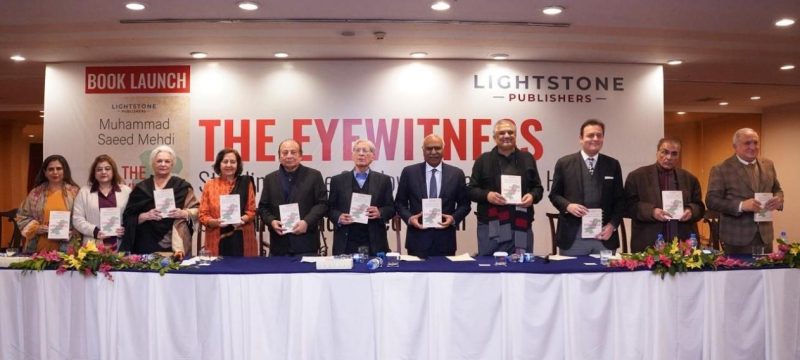
The launch of Muhammad Saeed Mehdi’s much-anticipated memoir, The Eyewitness: Standing in the Shadows of Pakistan’s History, was held at a well-attended event in Lahore. Hosted by Lightstone Publishers, the launch brought together an audience of over 500, including diplomats, senior journalists, legal experts, academics, and literary figures, marking the unveiling of a work that contributes significantly to Pakistan’s political and journalistic record.
Opening the ceremony, Ameena Saiyid, Managing Director of Lightstone Publishers, highlighted the historical importance of the memoir, stating, “This book is not merely a collection of memoirs; it is an eyewitness record of Pakistan’s political history. The eras Muhammad Saeed Mehdi closely observed are invaluable historical documentation for future generations.” She further noted Lightstone Publishers’ longstanding commitment to education and cultural development, emphasizing that the school textbooks developed by Lightstone are culturally grounded and aim to nurture critical thinking and historical awareness among younger generations.
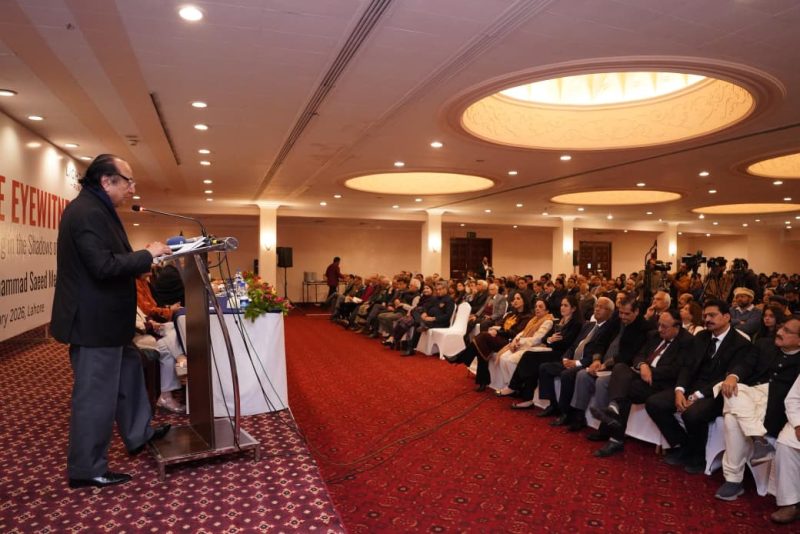
In his opening remarks, Muhammad Saeed Mehdi, the author, spoke candidly about his motivation for writing the book, sharing, “I wrote this book to preserve the truth. I have written exactly what I saw, nothing more, nothing less.”
The discussion then transitioned into a thoughtful exchange among senior panelists, focusing on the political, judicial, and journalistic dimensions of the memoir.
Aitzaz Ahsan, Senior Lawyer and Chief Guest, emphasized the importance of firsthand accounts, noting, “To understand Pakistan’s history, eyewitness accounts are indispensable. The judicial aspects of the Bhutto case documented in this book are an important part of our legal history.” He further remarked, “Writing a book is a form of jihad. In our society, a single sentence can provoke backlash, yet Saeed Mehdi has written fearlessly and truthfully.” Reflecting on the broader political environment, he added, “Oppression created an environment where journalists were picked up, and political identities were reshaped by force rather than consent.”
Dr. Amjad Saqib highlighted the book’s role in preserving national consciousness, stating, “Nations are built on their collective memory, and this book is a serious effort to preserve that national memory,” while stressing that “the younger generation must learn from such honest and courageous writings.”
Adding a senior bureaucrat perspective, Farhan Khawaja remarked, “Young journalists and bureaucrats must read this book to understand what professional integrity truly means in difficult circumstances.”
The conversation, moderated by Raheela Baqai, further explored the ethical and historical weight of the memoir.
Veteran journalist Mujib-ur-Rehman Shami, Chief Editor of Roznama Pakistan, praised Mehdi’s lifelong commitment to truth, stating, “Muhammad Saeed Mehdi is among those rare individuals who never abandoned the truth, even in the most difficult times.” He added, “From Assistant Commissioner to Principal Secretary, he served at the highest levels and endured imprisonment under martial law and NAB without ever compromising.” Emphasizing the book’s academic value, he remarked, “This book should be part of the curriculum for students of journalism, politics, and history,” concluding that “he never became a state witness; he remained a witness of the people.”
Highlighting the narrative strength of the book, Sohail Warraich observed, “The style of the book is simple yet deeply impactful, taking the reader through defining moments of our history.” He added, “This is not just reporting; it is the story of an era.” Commenting on the public response, he noted, “The large public turnout today is proof that people still stand as witnesses to truth.”
Concluding the discussion, Senator Walid Iqbal stated, “To understand Pakistan’s political history, multiple perspectives are essential, and this book presents a very important one.”
Following the panel discussion, the audience was deeply moved by a special musical tribute as Shayma Saiyid performed the patriotic song “Yeh Watan Tumhara Hai,” adding an emotional and reflective close to the formal proceedings.
The event concluded with an active book-signing session, where attendees engaged directly with the author, reflecting on the revelations and historical insights presented in The Eyewitness: Standing in the Shadows of Pakistan’s History