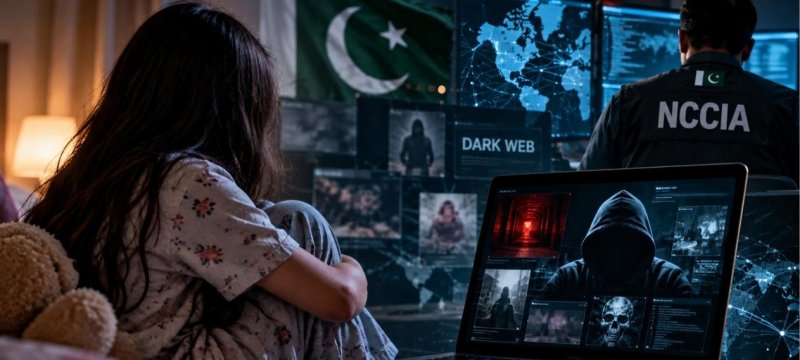
Pakistan’s National Cyber Crime Investigation Agency (NCCIA) has rescued a 13-year-old girl in Karachi after she was allegedly targeted by an online network that pressured her into carrying out dangerous tasks.
According to media reports citing NCCIA officials, the group was linked to the dark web and allegedly manipulated the teenager through online communications. Investigators said she had already followed one harmful instruction before the group directed her to put herself in danger.
NCCIA officials reportedly reached the girl before she could follow the subsequent instruction and informed her parents about the situation.
The incident has raised concerns about online manipulation, child safety and the methods criminal networks may use to pressure young people through digital platforms.
International Intelligence Leads NCCIA to the Girl
The investigation reportedly began after an international agency shared intelligence about suspicious online activity involving internet protocol (IP) addresses across 13 countries, including Pakistan.
The information prompted the NCCIA’s Karachi team to examine an IP address associated with the reported activity.
During their inquiries, investigators discovered that the person connected to the address was potentially a victim rather than an offender. Further investigation led them to the teenager.
The case highlights the role international intelligence-sharing can play in helping authorities identify vulnerable individuals and investigate suspected cross-border cybercrime.
Officials have not publicly disclosed all the technical details surrounding the operation.
Parents Were Unaware of the Online Contact
According to reports citing investigators, the girl’s parents did not know about her alleged involvement with the online group before authorities contacted them.
The family reportedly said they had noticed changes in their daughter’s behaviour over the preceding six months but had not connected them to her online interactions.
The case illustrates why communication between parents and children about digital activities can be important. Young people facing online pressure may be reluctant to seek help because they fear punishment, embarrassment or the loss of access to their devices.
Parents and guardians should approach such situations calmly and focus on protecting the child rather than blaming them.
Authorities have not released the teenager’s identity, and it should remain private because she is a minor involved in a sensitive investigation.
NCCIA Investigates Suspected Online Network
The NCCIA is reportedly examining the accounts used to contact the girl and attempting to identify the individuals behind the suspected network.
Investigators are also looking into whether other children in Pakistan may have been approached through similar online activities.
As of the latest reports, the identities of the suspected operators have not been publicly confirmed, and no arrests connected to the case have been announced.
The investigation remains ongoing. Allegations concerning the network should therefore be treated as reported claims rather than established findings.
UNICEF Research Highlights Online Risks for Children in Pakistan
The case comes as new research highlights the wider risks children face in digital environments.
A September 2026 study by UNICEF, ECPAT International and INTERPOL found that nearly one in 16 internet-using children aged 12 to 17 in Pakistan experienced at least one form of technology-facilitated sexual exploitation or abuse within a year. The estimate represents approximately 1.5 million children.
The report, Disrupting Harm in Pakistan, examined the scale of technology-facilitated sexual exploitation and abuse, barriers to reporting and gaps in child protection. It also highlighted how fear, stigma and concerns about family reactions can prevent children from seeking help.
The study focuses specifically on sexual exploitation and abuse enabled by technology. It does not measure the prevalence of every form of harmful online activity or dangerous task-based group.
Nevertheless, its findings underline the importance of effective reporting systems, child-sensitive investigations and stronger cooperation between families, schools, authorities and digital platforms.
How Parents Can Help Protect Children Online
Children can encounter manipulative or threatening individuals through messaging services, social media, online games and other digital communities.
Parents and guardians can take several practical steps to improve online safety:
- Maintain open, non-judgmental conversations about children’s online experiences.
- Encourage children to report threatening messages, blackmail or pressure to complete dangerous tasks.
- Teach children not to share personal information, private images or account details with unknown contacts.
- Review privacy and safety settings on social media, messaging services and gaming accounts.
- Take sudden behavioural changes or signs of online intimidation seriously without making assumptions.
- Preserve relevant messages, account names and other evidence if a threat is discovered, provided doing so is safe.
- Report serious threats to the relevant authorities and seek professional support when a child may be at risk.
If a child appears to be in immediate danger, a trusted adult should seek urgent assistance from local emergency services or the relevant authorities.
Online Child Safety Remains a Growing Concern
The Karachi incident demonstrates the potential consequences of online manipulation when vulnerable children are targeted through digital communications.
International cooperation reportedly helped investigators identify the teenager before the situation escalated further. The NCCIA’s ongoing inquiry may establish more about the people behind the suspected network and whether additional children were approached.
For families, the case reinforces the importance of trust, early intervention and safe ways for children to ask for help.
In other news read more about: We Are Secretly Watching Your Every Click on Phone: NCCIA’s Director
Source and verification note: This report draws on media coverage citing NCCIA officials and UNICEF’s Disrupting Harm in Pakistan research. The investigation into the suspected online network remains ongoing, and the allegations have not been established in court.