


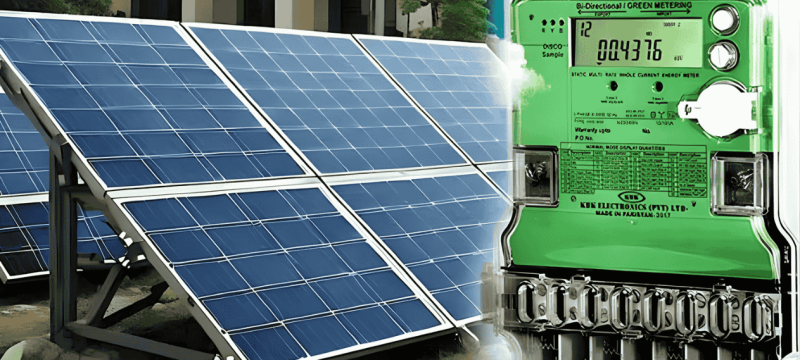
Pakistan Solar Association President Hasnat Ahmed has warned that the new net billing system may push solar consumers toward battery storage solutions.
Speaking on ARY News’ Bakhabar Savera, he said the change could reduce public trust in the government. Consumers facing high electricity bills may now prefer independent battery systems instead of grid-connected solar solutions.
Hasnat Ahmed explained that the Ministry of Energy and NEPRA’s shift from net metering to net billing could discourage new solar installations. Existing solar consumers are also uncertain about their future options under the new system.
Under the previous net metering system, solar consumers could use electricity from their panels and send surplus power to the grid. When needed, they could draw electricity back from the grid, often lowering their bills significantly, sometimes to zero.
The new net billing rules, however, force solar consumers to sell excess electricity at very low rates. At the same time, they must buy electricity from the grid at the same high tariffs as non-solar users when their own generation falls short.
Prime Minister Shehbaz Sharif took notice of the issue on Wednesday. He chaired a meeting regarding NEPRA’s new regulations and directed the Power Division to file a review appeal. The goal is to protect existing contracts of solar consumers.
The Prime Minister emphasized that the burden of 466,000 solar consumers should not be shifted onto more than 37.6 million other electricity users. He also instructed the Power Division to develop a comprehensive strategy to address the situation fairly.
Hasnat Ahmed said that the transition to net billing could slow solar adoption in Pakistan. Many potential solar consumers may rethink their investments, fearing higher costs and uncertainty under the new system.
Experts believe that balancing the rights of current solar consumers with overall electricity demand is essential. The government’s next steps will be critical in maintaining public confidence in renewable energy initiatives.
The outcome of the review and potential adjustments by NEPRA will determine whether solar consumers continue to benefit from clean energy savings or face higher costs.
In other news read more about: Solar Consumers Face Rs10,000 Bill for 300 Units Under New Net Metering Policy