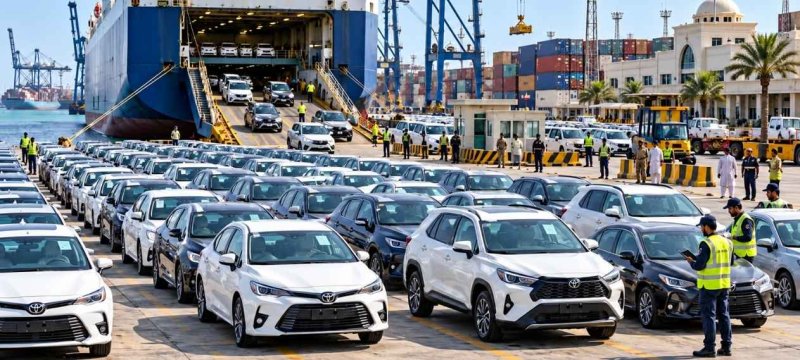
Pakistan’s car imports increased significantly during the first two months of fiscal year 2026, according to data from the Pakistan Bureau of Statistics (PBS). The country imported cars worth $81.4 million in July and August 2026.
The figure shows a 36% year-on-year increase compared with $59 million recorded during the same period last year. The rise comes despite recent government measures aimed at controlling used vehicle imports.
In January, the government abolished the baggage scheme for used car imports. It also introduced mandatory pre-shipment inspections for vehicles imported through gift and transfer-of-residence schemes.
According to Indus Motor Company (IMC), used car imports decreased during FY2026. The company stated that around 38,000 used vehicles were imported compared with 42,000 units in the previous year.
However, auto parts manufacturers believe used vehicles are still entering Pakistan through different import channels. They have raised concerns about the impact of increasing imports on the local automotive industry.
Former PAAPAM chairman Aamir Allawala said that 1,938 used vehicles arrived in Pakistan during July. Another 1,445 units were imported in August. He added that most of these vehicles entered through the gift scheme.
The demand for new energy vehicles (NEVs) has also increased in Pakistan. Chinese companies have expanded their presence, with monthly NEV arrivals estimated between 1,500 and 2,000 units.
The growing number of completely built-up (CBU) vehicles has created concerns among local auto parts manufacturers. Industry representatives say imported vehicles may reduce demand for locally produced components.
They also warned that lower demand for local parts could affect employment opportunities in the vendor sector. Local manufacturers have highlighted the role of domestic production in supporting the automotive supply chain.
Aamir Allawala stated that several locally assembled vehicles contain more than 50% local content by value. He added that locally produced parts contribute around Rs1.5 million per vehicle.
Meanwhile, an auto assembler said new companies are being encouraged to import NEVs. The move is part of efforts to reduce Pakistan’s dependence on imported fuel.
In other news read more about: Travel Alert: GT Road, M-14 Motorway To Close From Tonight Ahead of PTI Protest
The increase in Car imports reflects changing trends in Pakistan’s automotive market. The industry continues to balance consumer demand, local manufacturing, and government policies related to vehicle imports.