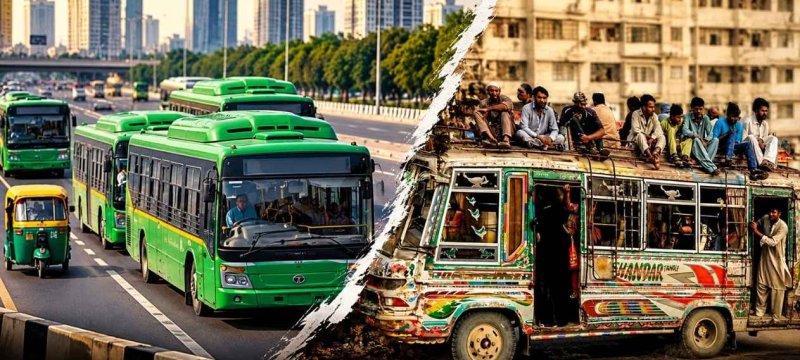
ISLAMABAD, Pakistan: Pakistan’s transport system remains heavily dependent on private vehicles, while public transport accounts for less than 0.5% of the vehicle-based weighting in a newly launched mobility index by BusCaro and Pakistan & Counting.
The findings have renewed calls for expanding public bus services, improving urban transport infrastructure and promoting local electric bus manufacturing to make commuting more affordable and sustainable.
According to the index, privately owned motorcycles, cars and rickshaws account for 98.7% of its vehicle-based weighting. The assessment covers approximately 36.7 million vehicles, including 30.3 million motorcycles and 5.1 million cars, using figures cited from the Pakistan Economic Survey 2024-25.
The index measures the cost of travelling across eight transport modes and weights its results according to the number of vehicles on the road. Its public transport share therefore reflects the index’s methodology rather than the proportion of passengers who use buses nationwide.
The findings highlight the need for a stronger public transport network as Pakistan’s major cities face growing commuting demands.
The index also found that the average cost of travelling one kilometre fell by 7.9% between May and September 2026. The average cost declined from Rs10.48 to Rs9.65 during the period.
Lower fuel costs and reduced ride-hailing fares contributed to the overall decline. Fuel-only running costs for privately owned motorcycles, cars and rickshaws decreased by 7.5%.
However, the public transport component recorded a 77% increase, rising from Rs1.22 to Rs2.16 per seat-kilometre.
The increase was largely linked to the restoration of regular fares on Punjab’s Metro Bus, Bus Rapid Transit and Orange Line services after a period of free travel. As a result, the change reflects the return of fares rather than necessarily indicating an equivalent increase in operating expenses.
Automotive expert Mashood Ali Khan has called for greater investment in public bus networks to address the country’s transport challenges.
He emphasized that reliable and affordable mass transit is essential for daily commuting and economic activity. He also pointed to international examples, including China, Europe and India, where extensive transport networks support urban mobility.
Khan recommended that transport routes be planned according to passenger demand and industrial requirements. Better infrastructure and cleaner vehicles could encourage more people to use shared transportation instead of relying on private vehicles.
He also highlighted the potential for electric bus manufacturing in Pakistan, suggesting that cooperation with established international manufacturers could help develop local production facilities.
Domestic manufacturing could reduce reliance on imported buses and components while creating employment opportunities and supporting the automotive industry. However, achieving these benefits would require investment, technical expertise, suitable charging facilities and long-term government planning.
Khan estimated that Pakistan currently has around 2,000 buses, while annual demand could reach between 18,000 and 20,000 units. These figures represent his estimates of the existing fleet and potential demand, rather than confirmed government procurement targets.
Karachi faces particular challenges because of deteriorating roads, inadequate transport facilities and coordination issues between federal and provincial authorities.
Khan said communication gaps between different levels of government can delay infrastructure projects and increase development costs. He called for a coordinated national transport policy with clear goals and implementation timelines.
He also proposed that all four provinces assess their transport requirements so the federal government can develop a nationwide roadmap for investment, bus procurement and infrastructure improvements.
A coordinated approach could help authorities identify areas with the greatest need for public transport and establish priorities for expanding services.
The mobility index has brought renewed attention to the gap between private vehicle ownership and public transport availability in Pakistan. Expanding bus networks, investing in electric mobility and supporting domestic manufacturing could help improve access to affordable commuting options.
In other news read more about: Islamabad’s Major Roads to Remain Closed for Two Days
Experts argue that long-term planning and stronger coordination between governments will be essential to building a transport system that better serves Pakistan’s growing urban population.