


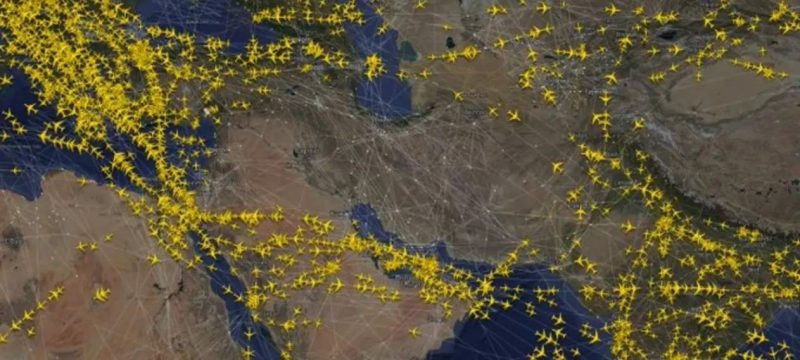
Pakistan has instructed its air traffic controllers to closely monitor the country’s airspace following escalating tensions in the Middle East.
The directive includes increased surveillance of regions near Iran and Afghanistan, where the situation remains volatile. Pakistani authorities are taking precautionary steps to safeguard national airspace.
Reports confirmed that airlines operating in Pakistan have been advised not to use Iranian airspace. This move comes amid growing concerns over safety following Israeli and US strikes on Tehran, Iran’s capital.
The aerial attack by Israel, carried out in coordination with the United States, triggered emergency sirens across Tehran. Loud explosions were reported throughout the city as the operation unfolded.
US President Donald Trump confirmed that American forces were part of a large-scale operation against Iran. He cited Iran’s history of hostility toward the United States, including attacks on American interests in the region.
Israeli defense officials stated that the strikes had been planned for months. They described the operation as preemptive, aimed at neutralizing immediate threats from Iran.
Pakistan’s Ministry of Aviation emphasized that the heightened monitoring of Pakistan Airspace is a precaution. Authorities have placed all military and civilian radar systems on alert to ensure the safety of commercial flights.
The developments underscore the potential regional impact of the US-Israel-Iran conflict. With tensions escalating rapidly, Pakistan Airspace is under strict observation to prevent any spillover incidents.
Officials also noted that Pakistan will continue coordinating with airlines and international aviation bodies. All measures are intended to minimize risks to civilian aircraft and maintain the safety of national air routes.
In other news read more about Iran Strikes Back at Israel with Missile Barrage After US–Israel Attacks on Tehran
The situation remains fluid, and Pakistan’s aviation authorities are expected to update protocols as the regional security landscape evolves.