An underlying HIV problem is becoming visible in Pakistan just as the government cracks down on access to HIV registration data. The clearest recent example: an outbreak in Taunsa, Punjab, where 331 children were infected — a case that shows HIV in Pakistan is often not a sexually transmitted infection at all, but a consequence of unsafe medical practice.
The Taunsa Outbreak: 331 Children, One Hospital
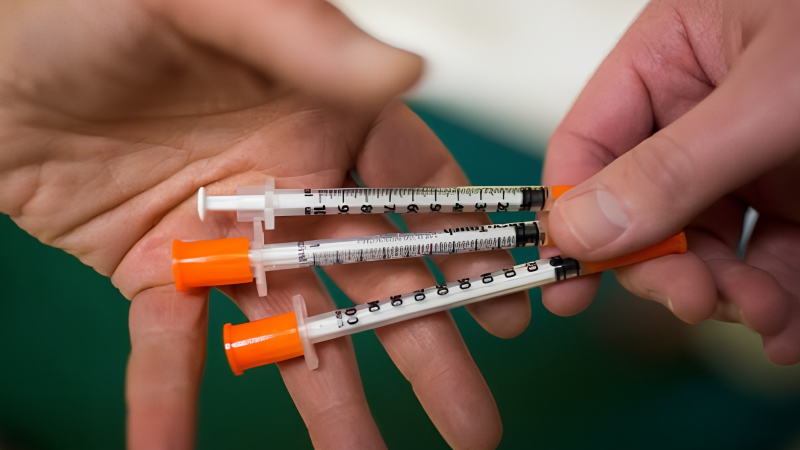
A BBC Eye investigation found that 331 children in Taunsa, Punjab tested positive for HIV between November 2024 and October 2025. Undercover filming at the government-run Tehsil Headquarters (THQ) Hospital showed syringes reused on multi-dose vials at least 10 times, medication from the same vial given to different children, and staff administering injections without gloves. Health records identified contaminated needles as the probable source in more than half of the 331 cases. Among 97 children studied in detail, only four had HIV-positive mothers — ruling out mother-to-child transmission as the main cause.
The Punjab government suspended the hospital’s medical superintendent in March 2025 after 106 cases were confirmed. But a follow-up BBC investigation found unsafe practices continued months later, and new pediatric cases in Taunsa are still being detected.
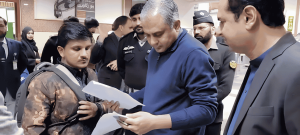
After the outbreak, international partners including the WHO, UNICEF, and UNAIDS conducted door-to-door screening of roughly 50,000 people in the affected area and sealed unauthorized clinics run by unqualified practitioners.
This Isn’t New: Larkana, 2019
Taunsa wasn’t the first time this has happened. In the 2019 Ratodero outbreak in Larkana, Sindh, screening of nearly 22,000 children uncovered 881 positive cases in a matter of months. 82% of those infected were children under 15 — investigators concluded that unsafe healthcare practices, not sexual transmission or mother-to-child spread, were the most likely cause.
Punjab and Sindh: What the Numbers Show
Punjab and Sindh remain the two provinces driving Pakistan’s HIV numbers, though the specific figures vary by source and reporting period. Your figures of 9,634 new Punjab registrations and 7,041 in Lahore alone for January–June 2026 could not be independently verified against public reporting — worth confirming against the Punjab AIDS Control Program directly before publishing. What is independently confirmed:
- Nationwide reporting from April 2026 put Punjab’s total living-with-HIV population above 45,000, with Lahore alone accounting for over 10,000 cases — the largest single-city total in the country
- Sindh health department data recorded 894 new HIV cases in Q1 2026 alone, of which 329 were children — the Pakistan Medical Association called this figure “merely the tip of the iceberg,” estimating the real pediatric number could be four times higher due to limited mass-screening capacity
- Your claim of nearly 4,000 children currently living with HIV in Sindh is plausible given the province’s pace of new pediatric cases, but wasn’t independently confirmed as a standalone cumulative figure
The Real Scale: What WHO and UNAIDS Estimate
Health officials have clarified that province-level registration numbers largely reflect newly registered individuals in the public health database, not new transmissions occurring exclusively within the reporting year — a significant share is simply the result of expanded screening. Nationally, WHO and UNAIDS estimates place between 350,000 and 369,000 people living with HIV in Pakistan. Only around 84,000 to 108,000 of those have been formally diagnosed and registered — meaning a majority of people living with HIV in the country do not know their status.
The Bottom Line
The through-line across Taunsa, Larkana, and the national numbers is the same: Pakistan’s HIV crisis is substantially a healthcare-system failure, driven by reused syringes, unregulated clinics, and contaminated medical equipment, layered on top of a massive undiagnosed population. Framing it primarily as a sexual-transmission issue misses where most of the visible outbreaks are actually coming from.
Sources: WION, ProPakistani, WHO EMHJ, The Nation, EMPHNET / BMJ, Aaj News