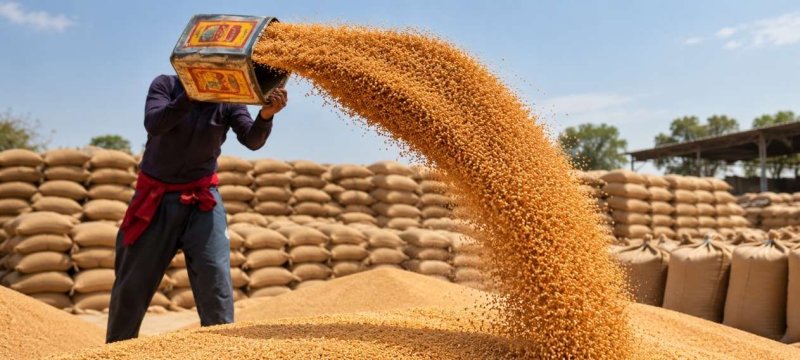
Punjab’s wheat procurement system is facing criticism over its impact on Farmers and the wider grain market.
Growers have reportedly struggled to benefit from the government-backed procurement mechanism. Meanwhile, private dealers and middlemen continue to play a major role.
Punjab introduced a benchmark wheat procurement price of Rs3,500 per 40kg under its Wheat Policy 2026.
The province also moved away from traditional direct government purchasing. Instead, private aggregators were given responsibility for procurement, financing and storage.
The government said the new model would improve market access for growers. It was also designed to support digital payments and streamline wheat purchases.
However, reports suggest the system faced significant challenges during implementation.
Private Aggregator Model Faces Challenges
In April, only 10 of 35 registered aggregators were reportedly participating actively in wheat procurement.
Their combined purchasing capacity was estimated at around 1.8 million tonnes. The procurement target was around 3 million tonnes.
This gap raised concerns about whether the new system could purchase enough wheat directly from growers.
Market conditions also created another challenge.
By June, wheat reportedly traded around Rs4,200 per 40kg in some areas. The official benchmark for aggregators remained Rs3,500.
This price difference encouraged some Farmers to sell their crops to private buyers and intermediaries.
Reports in July said 11 major private companies had been authorised as aggregators.
The development also attracted criticism from growers and millers. Questions were raised about pricing and guarantees offered under the system.
Farmers Raise Concerns Over Wheat Prices
By August, farmer representatives were openly criticising the procurement mechanism.
Some growers reportedly sold wheat below Rs3,000 per 40kg. Meanwhile, the grain was later marketed at significantly higher prices.
This situation increased concerns about the influence of stockists and traditional intermediaries.
Some market stakeholders have alleged that intermediaries earned margins of Rs1,200 to Rs1,300 per 40kg in certain transactions.
However, these claims require independent verification by the relevant authorities.
The situation has also highlighted differences between official procurement rates and changing open-market prices.
Wheat traders reportedly purchased grain from growers before supplying major markets. These included Rawalpindi, Islamabad and Wah Cantonment.
For Farmers, the central issue is whether the new system provides sufficient bargaining power and reliable access to buyers.
The controversy has placed Punjab’s Wheat Policy 2026 under renewed scrutiny.
The debate now centres on whether private aggregators can improve procurement efficiency while protecting growers from unstable prices.
In other news read more about: Jazz Users Are Frustrated as Slow Internet Sparks Complaints
The effectiveness of the policy will ultimately depend on implementation, market access and whether growers receive competitive prices for their wheat.