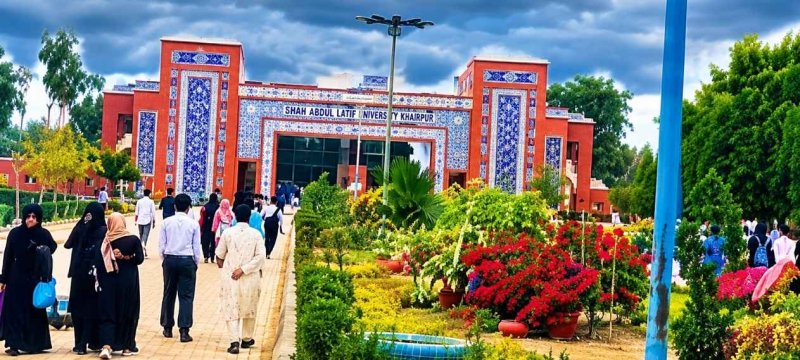
KHAIRPUR: Shah Abdul Latif University (SALU) has declared the academic records of 1,184 LLB candidates invalid following an investigation into alleged irregularities in law qualifications.
The university reviewed examination results, attendance records, fee documents, bank statements, and other relevant evidence. The investigation identified discrepancies involving candidates from three-year and five-year LLB programmes.
According to reports published on October 18, 2026, the university also verified the records of 64 candidates and found them valid.
The development has raised concerns about academic verification and the credibility of legal education in Pakistan.
SALU Investigation Identifies Irregularities in LLB Records
Shah Abdul Latif University formed an inquiry committee on April 11, 2026, to investigate the disputed academic records.
The committee examined documents associated with candidates from different academic sessions. Its review covered attendance records, examination results, financial documents, and other supporting evidence.
Following the investigation, the university took action against the disputed records. Reports indicate that the decision followed recommendations from the inquiry committee and approvals by the university’s Syndicate.
The action covers examination results, transcripts, and degrees associated with the affected records.
The findings are significant for candidates who intend to use their qualifications for further education or professional enrolment. However, the university’s decision should be distinguished from any separate determination of individual responsibility for the alleged irregularities.
Breakdown of the 1,184 Affected LLB Candidates
The reported irregularities involve candidates from two LLB programmes.
| LLB programme | Academic sessions | Candidates |
|---|---|---|
| Three-year LLB | 2016, 2017 and 2018 | 658 |
| Five-year LLB | 2017 batch | 526 |
| Total affected | — | 1,184 |
The three-year LLB programme accounts for 658 candidates whose records were declared invalid. Another 526 candidates belong to the 2017 batch of the five-year programme.
Meanwhile, the university verified the records of 64 candidates and found them valid.
These findings highlight the importance of maintaining accurate examination, attendance, and admission records across educational institutions.
HEC and Bar Councils Receive the University Findings
Shah Abdul Latif University has forwarded information about the affected candidates to the Higher Education Commission (HEC), Pakistan Bar Council, and concerned provincial bar councils.
The university has also published information about the disputed academic records on its official website. The information is intended to support further verification and action by the relevant authorities.
The involvement of these institutions is important because recognised law qualifications are required for professional enrolment and legal practice.
The relevant authorities may review the records and determine further steps under applicable regulations.
How the Decision Could Affect Law Graduates
The university’s decision could create uncertainty for candidates whose academic credentials have been declared invalid.
Law graduates must meet the applicable educational and professional requirements before obtaining enrolment with a bar council. Disputed qualifications could therefore affect applications for professional registration.
Affected candidates should review the university’s formal notifications and contact the relevant authorities for clarification. They should also determine whether any review or appeal process is available under the applicable rules.
The consequences for individual candidates will depend on the formal decisions and any subsequent action taken by the responsible institutions.
Why Academic Verification Matters in Pakistan
Reliable academic records are essential for maintaining confidence in higher education. Universities must ensure that examination results, attendance records, financial documents, and degree certificates are properly maintained.
Verification is particularly important for professional qualifications such as law degrees. Regulatory bodies rely on accurate academic information when assessing candidates for professional enrolment.
The SALU investigation highlights the need for coordination between universities, affiliated colleges, and professional regulators. It also demonstrates the importance of transparent procedures when discrepancies are discovered.
What Happens Next?
Shah Abdul Latif University’s findings have been shared with relevant educational and professional bodies. Information about the disputed records has also been made available through the university’s official website.
Further developments will depend on additional verification and decisions by the responsible authorities.
In other news, read more about: Lahore High Court Decision Brings Fresh Development for MDCAT 2026
For now, the reported decision affects 1,184 LLB candidates, while 64 candidates had their academic records verified as valid. The case highlights the importance of academic transparency and reliable verification of law qualifications in Pakistan.