

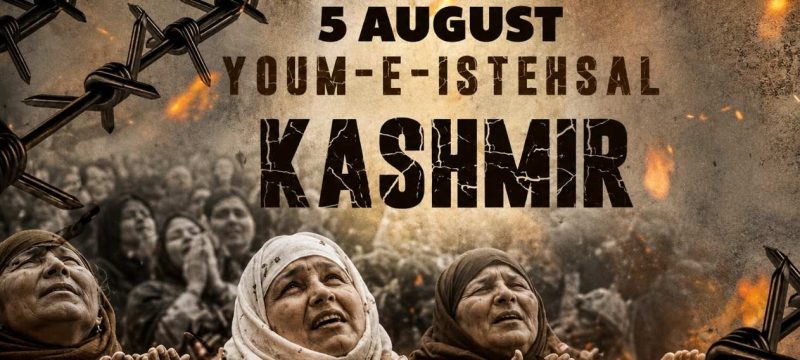
Pakistan is observing Youm-e-Istehsal Kashmir on Wednesday, August 5, with public events and official messages expressing solidarity with Kashmiris and opposing India’s constitutional actions of 2019.
The observance marks seven years since the Indian government removed most of the provisions of Article 370 and ended the application of Article 35A on August 5, 2019. The former state of Jammu and Kashmir was subsequently reorganised into two union territories: Jammu and Kashmir, and Ladakh.
Pakistan rejected the decision and maintains that unilateral constitutional changes cannot alter the disputed status of Jammu and Kashmir. The issue remains central to relations between the two nuclear-armed neighbours.
Pakistan’s Leadership Reaffirms Kashmir Support
President Asif Ali Zardari said Pakistan would continue providing moral, political and diplomatic support to the people of Jammu and Kashmir.
In his Youm-e-Istehsal message, the president said the passage of seven years had neither changed the legal status of the dispute nor weakened the aspirations of Kashmiris.
He called upon the international community, particularly the United Nations, to address the human rights situation and support a peaceful settlement of the longstanding dispute.
Prime Minister Shehbaz Sharif described a peaceful and just settlement of the Kashmir dispute as a cornerstone of Pakistan’s foreign policy.
He said Pakistan would continue raising the issue at regional and international forums. The prime minister also called for a resolution based on relevant United Nations Security Council resolutions and the right of Kashmiris to determine their future.
APHC Calls for Black Day Observance
The All Parties Hurriyat Conference urged Kashmiris on both sides of the Line of Control and in other countries to observe August 5 as Black Day.
According to the APHC, the observance is intended to demonstrate opposition to the constitutional and administrative measures introduced by New Delhi in 2019.
Its Azad Jammu and Kashmir chapter also appealed to overseas Kashmiri communities to organise demonstrations and draw international attention to the dispute.
Political parties in Jammu and Kashmir, including the National Conference, Peoples Democratic Party and Congress, were also expected to hold separate protests against the 2019 decision. Security was tightened ahead of those gatherings.
What Happened on August 5, 2019?
Article 370 had provided Jammu and Kashmir with a special constitutional arrangement within India. Article 35A allowed the territory’s legislature to define permanent residents and determine certain residency-related rights.
The Indian government argued that ending the special arrangement would promote integration, development and uniform application of national laws.
Pakistan, Kashmiri groups opposed to the decision and several regional political parties rejected that position. They argued that the changes were imposed without the consent of the territory’s population and could affect its political identity and demographic structure.
Why the Observance Matters
Youm-e-Istehsal has become an annual part of Pakistan’s diplomatic and public messaging on Kashmir. Rallies, seminars and solidarity activities are generally held across the country and by Pakistani missions overseas.
For Islamabad, the day serves two purposes: renewing support for Kashmiris and keeping international attention focused on the unresolved dispute.
Pakistan’s official position remains that lasting peace in South Asia is closely connected to a peaceful settlement of the Kashmir issue. India considers Jammu and Kashmir an internal matter and rejects outside intervention.
In other news read more about: When Is Eid Milad-un-Nabi 2026? Rabi-ul-Awwal Moon Prediction for Pakistan
Seven years after the August 2019 changes, the two countries remain divided over the territory’s status, while Kashmir continues to be one of South Asia’s most enduring political disputes.