

Astronomers have discovered that some of the most common planets in our galaxy start out as puffy worlds, confirming long-standing theories about planetary evolution.
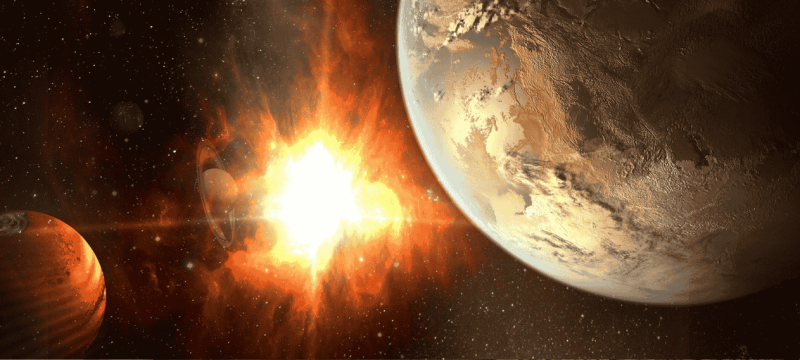
The study, published in Nature, examined four infant exoplanets in the V1298 Tau system. The star they orbit is only 20 million years old. These planets are five to ten times larger than Earth in radius but only five to fifteen times its mass. This makes them extremely low-density, similar to polystyrene foam.
Researchers explained that intense heat and light from the young star cause the planets’ atmospheres to expand. This makes them puffy, with bloated outer layers that can lose large amounts of gas into space. Over billions of years, these planets are expected to shrink and evolve into more compact “super-Earths” or “sub-Neptunes,” sizes commonly found across the galaxy but absent in our solar system.
“These planets have already undergone a dramatic transformation,” said co-author Prof. James Owen. “They will continue to shrink and settle into the more compact sizes we see elsewhere.”
The discovery relied on precise measurements of planetary transits—the dips in starlight as planets pass in front of their star. Determining the orbits of the outer planets was particularly challenging. Professor Erik Petigura compared successfully locating them on the first attempt to “getting a hole-in-one in golf.”
By analyzing the gravitational interactions between the planets, the team estimated their masses. This provided the first direct observational evidence of the puffy phase in planetary evolution.
“This is the first time we have clearly seen planets in this bloated, puffy state,” said the researchers. “It confirms our models and helps us understand how common planets grow and evolve across the galaxy.”
The findings shed light on early planetary development and offer insight into how ordinary exoplanets in the Milky Way may change over billions of years.
In other news read more about: Astronomers Discover Young Rogue Planet Devouring Its Surroundings