

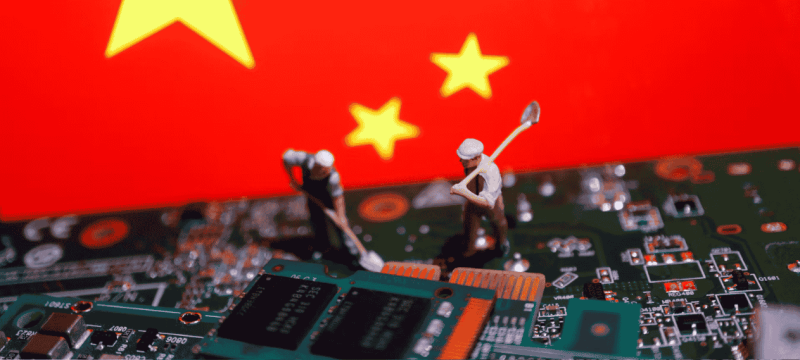
China has introduced a new mandate requiring chipmakers to use at least 50% domestically produced equipment when expanding or building new plants. The move is part of Beijing’s push to create a self-sufficient semiconductor supply chain amid ongoing U.S. export restrictions.
The rule, not yet publicly documented, instructs chipmakers seeking state approval to prove through procurement that at least half their equipment is Chinese-made. Applications that fail to meet this threshold are typically rejected, though flexibility is allowed for supply constraints or advanced chip production lines.
The 50% requirement affects all sectors of chip manufacturing, even where foreign tools from the U.S., Japan, South Korea, and Europe remain available. Officials aim for a future where plants use 100% domestic equipment to reduce dependence on foreign suppliers.
President Xi Jinping has called for a “whole nation” effort to develop a fully self-sufficient semiconductor supply chain.
Thousands of engineers and scientists are working across companies and research centers to advance domestic technologies.
State-affiliated entities placed a record 421 orders for domestic lithography machines and parts in 2025, worth around 850 million yuan.
The government has also invested heavily in the sector through its “Big Fund,” providing 344 billion yuan ($49 billion) in its third phase to support local chipmakers.
The policy is already producing results. Naura Technology, China’s largest chip equipment group, is testing its etching tools on SMIC’s 7nm production line. Previously, advanced etching equipment was dominated by foreign companies like Lam Research and Tokyo Electron.
Naura and AMEC, another domestic supplier, are now replacing foreign tools in critical chipmaking steps, helping Chinese chipmakers advance rapidly.
The new requirements have accelerated innovation. Naura filed 779 patents in 2025, more than double its filings in 2020–2021. AMEC filed 259 patents, showing strong domestic R&D growth.
Analysts estimate China has achieved around 50% self-sufficiency in certain semiconductor equipment, previously dominated by Japanese suppliers. The 50% domestic equipment mandate signals a significant shift in the global semiconductor landscape, strengthening China’s chip industry while limiting foreign competition.
This policy is expected to shape the future of global chipmaking, with domestic suppliers like Naura and AMEC taking a leading role.
In other news read more about:Chipmakers indicate a reduction in supply, but demand recovery remains gradual