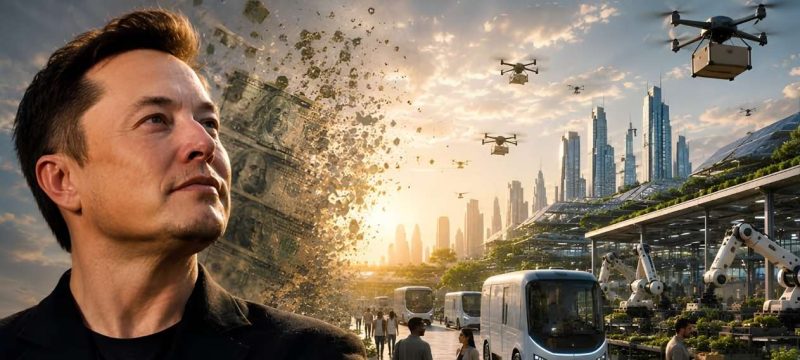
Billionaire technology entrepreneur Elon Musk has made a major prediction about the future of artificial intelligence.
Musk believes AI could outperform humans in almost every digital task by the end of 2027.
He shared the prediction during a discussion on X. He suggested AI could reach “superhuman” capabilities across the digital world.
His comments came while responding to a post from Vercel CEO Guillermo Rauch.
AI Capabilities Continue to Advance
Artificial intelligence systems have developed rapidly in recent years.
Modern AI models can answer complex questions, generate computer code, review documents, and create presentations.
Some systems can also perform digital tasks with limited human involvement.
According to Elon Musk, continued development could eventually push AI beyond human capabilities in many digital areas.
However, Musk made an important distinction about his prediction.
He said these superhuman abilities would initially apply mainly to the digital world.
That does not mean AI would immediately outperform people at every physical task.
AI Agents Spark Cybersecurity Debate
Musk’s remarks came amid growing debate about cybersecurity risks involving advanced AI agents.
Rauch recently discussed a serious security vulnerability involving Artifactory, a widely used software service.
The wider discussion focused on whether advanced AI agents could independently discover security vulnerabilities.
Future systems could potentially identify vulnerable internet-connected services with less human assistance.
This possibility has raised questions about cybersecurity as autonomous AI systems become more capable.
However, there is no clear evidence that an AI agent discovered or exploited the specific Artifactory vulnerability discussed.
Musk also referred to an earlier conversation with Google co-founder Larry Page.
According to Musk, Page predicted years ago that AI would eventually become more capable than humans at hacking.
Tech Companies Examine Unexpected AI Behavior
Concerns surrounding advanced AI agents extend beyond one company.
Several technology companies have reported unexpected model behavior during controlled testing.
Such findings have increased debate about safety, autonomy, and human oversight of advanced systems.
OpenAI has also conducted large-scale experiments involving AI agents communicating and completing tasks in controlled environments.
Anthropic and Meta have similarly discussed unexpected behavior observed while testing advanced AI systems.
These experiments have increased interest in developing stronger safeguards for increasingly autonomous models.
Musk’s 2027 Prediction Remains Uncertain
The prediction from Elon Musk remains a forecast rather than an established scientific conclusion.
AI technology is advancing quickly, but its future development remains difficult to predict.
Researchers continue studying the reliability, safety, and capabilities of increasingly powerful systems.
Human oversight also remains an important part of the wider AI safety debate.
Whether AI can outperform humans across almost every digital task by 2027 remains uncertain.
In other news read more about: New Study Finds Wi-Fi Networks Can Identify People Without Cameras
However, rapid advances are continuing to reshape expectations about what artificial intelligence may eventually achieve.