

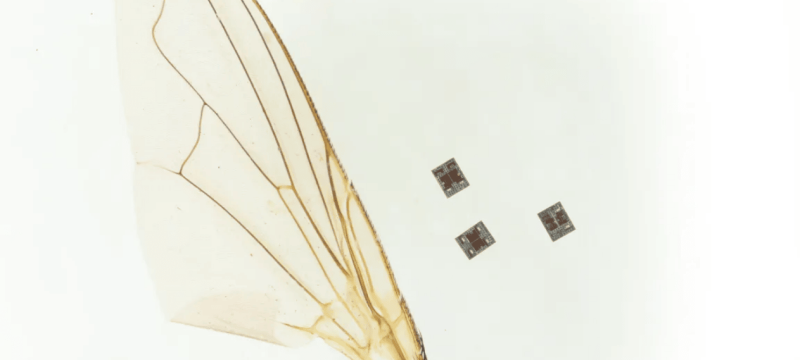
A collaborative research project between the University of Pennsylvania and the University of Michigan has reported a major advance in robotics. Scientists have built a sub-millimeter robot with its own computer, motor, and sensors. The achievement is notable because the device is smaller than a grain of salt.
The study was published in the journal Science Robotics. Researchers described the machine as the first tiny robot that can sense, think, and act on its own. Until now, most robots at this scale relied on external control. That limitation reduced their ability to respond to real-world conditions.
The new microrobot changes that approach. It processes information internally and reacts to its surroundings. Scientists say this could support future medical uses. Possible applications include tissue repair and targeted drug delivery. However, experts caution that such ideas should be taken with a grain of salt for now.
Marc Miskin, a co-author from the University of Pennsylvania, explained the importance of the robot’s size. He noted that many living systems already work at a similar scale. This comparison highlights why the breakthrough matters for biology and medicine.
The robot looks like a tiny microchip sealed in glass. The casing protects it from liquids. It is built using silicon, platinum, and titanium. Power comes from small solar cells built into the design. To move, the robot uses electrodes. These create a flow in nearby water particles, allowing it to swim.
Although the onboard computer is slow by modern standards, it is effective at this scale. The robot can detect changes in its environment. For example, it can sense temperature shifts and respond accordingly. Researchers say its size and power use are similar to single-celled organisms.
Communication is another key feature. The robot can exchange messages with human operators using a laptop. Scientists can send instructions and receive feedback. This allows them to monitor what the robot senses and how it behaves.
David Blaauw, another co-author, believes practical use is still years away. He estimates deployment could happen within a decade. For now, expectations should be taken with a grain of salt, as the technology remains experimental.
The research team is already planning the next step. Their current goal is to help these microrobots communicate with each other. If successful, it could mark another important milestone in robotics.
In other news read more about: Scientists in Denmark Create Yogurt Using Ants