


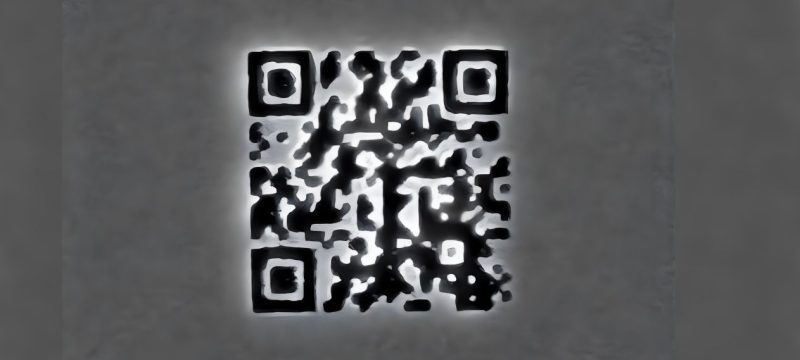
VIENNA – Researchers at the Vienna University of Technology have developed a microscopic QR code smaller than most bacteria, offering a groundbreaking method for storing information. The tiny code, measuring just 1.98 square micrometers, can store data that could last for centuries.
The team used beams of charged particles to engrave the QR code onto a durable ceramic surface. This allows the code to survive extreme conditions while remaining readable under an electron microscope. Ordinary optical microscopes cannot view it due to its minuscule size. The QR code currently links to the university’s official website.
Professor Paul Mayrhofer from the Institute of Materials Science and Technology said, “The structure is so fine that it cannot be seen with optical microscopes. Yet it is stable and repeatedly readable.” The use of thin ceramic films, commonly applied in high-performance cutting tools, ensures the information’s long-term preservation without power or maintenance.
Senior scientist Alexander Kirnbauer emphasized the importance of durable storage. “We live in the information age, yet most data is stored on media with short lifespans. Our ceramic QR code can endure hundreds of years, ensuring knowledge remains accessible to future generations.”
The team believes that scaling this technology could allow storage of more than two terabytes of data on a single A4 sheet of paper. Researchers plan to experiment with other materials, improve engraving speeds, and explore industrial-scale production.
This breakthrough demonstrates a fusion of modern technology and traditional principles, using durable, inert materials to safeguard data. If widely adopted, QR code engraving on ceramic could revolutionize long-term information storage and archival practices.
In other news read more about WhatsApp Adds QR Code Feature for Easier Channel Sharing
The study also opens doors for future innovations in data preservation, potentially providing a permanent, energy-free solution for safeguarding critical digital information against the limitations of conventional storage devices.