

Bangladesh’s plans to modernize its air force have sparked fresh debate across South Asia, particularly after reports linked Dhaka with possible purchases of advanced military aircraft. The discussion mainly centers around the country’s interest in acquiring a modern Fighter Jet fleet to replace aging aircraft currently used by the Bangladesh Air Force.
According to defence reports, Bangladesh is exploring several options as part of its long-term military modernization strategy under the “Forces Goal 2030” program. Officials say the country wants to improve its air defence capabilities and replace outdated aircraft that have remained in service for decades.
The Bangladesh Air Force currently operates older combat aircraft, including Chinese-made F-7 jets and aging MiG-29 fighters. Defence analysts have noted that many of these planes face maintenance and spare parts challenges due to their age.
Reports indicate that Bangladesh initially considered purchasing the French-made Rafale Fighter Jet. French President Emmanuel Macron reportedly discussed the deal during his visit to Dhaka in 2023. However, political developments following the fall of Sheikh Hasina’s government in August 2024 reportedly affected the negotiations.
Bangladeshi officials later suggested that buying the same Fighter Jet already used by India created political sensitivities. As a result, the Rafale deal reportedly lost momentum despite earlier discussions.
Bangladesh also explored the Eurofighter Typhoon option after the country’s air force chief reportedly tested the aircraft in Italy during 2025. However, analysts noted that the high costs of maintenance, training, and European export conditions created financial concerns.
The country is currently facing economic pressure under an International Monetary Fund (IMF) program, while foreign exchange reserves remain under strain. Experts believe these economic realities are influencing defence procurement decisions.
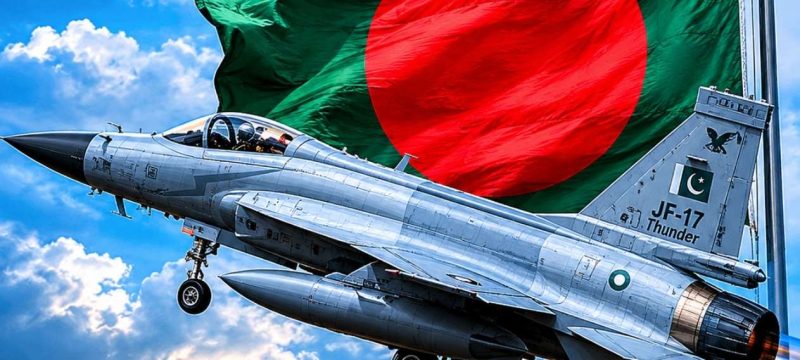
This situation reportedly opened the door for Pakistan’s JF-17 Thunder Block III aircraft. Defence experts describe the JF-17 as a relatively affordable Fighter Jet with modern radar systems and beyond-visual-range missile capability.
Reports claimed that a high-level Bangladeshi military delegation visited Islamabad in January 2025 for discussions regarding defence cooperation and pilot training programs. Pakistan later transferred a JF-17 Block III simulator to Bangladesh, which analysts see as a significant step toward possible procurement.
Defence sources estimate that Bangladesh could initially purchase around 16 aircraft under a deal reportedly valued at nearly $720 million. However, some analysts believe the total number may eventually rise further.
The possible defence cooperation between Bangladesh and Pakistan has drawn attention in India. Some Indian strategic commentators questioned why Bangladesh was rapidly expanding defence partnerships before national elections.
However, Bangladeshi officials and analysts argue that the country faces genuine regional security concerns, including instability near the Myanmar border and increasing strategic competition in the Bay of Bengal region.
Military experts also point out that India’s defence spending remains significantly larger than Bangladesh’s military budget. Reports suggest India spent nearly $128 billion on defence in 2025, compared to Bangladesh’s estimated $5 billion.
Analysts say the debate is less about military balance and more about changing regional relationships. Bangladesh’s interest in a modern Fighter Jet fleet appears linked to its broader effort to diversify strategic partnerships and strengthen defence capabilities independently.
In other news read more about: Bangladesh Restores ‘Except Israel’ Clause in Passports After Policy Reversal
The developments also highlight shifting geopolitical dynamics in South Asia, where regional countries are increasingly pursuing defence and diplomatic decisions based on evolving national interests rather than traditional alliances.