

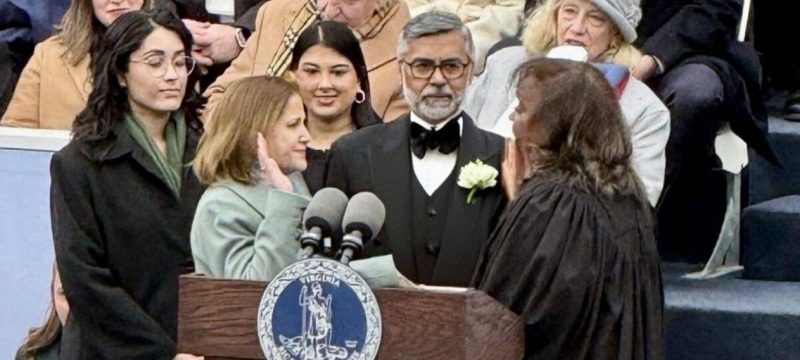
Ghazala Hashmi made history on January 17 by taking the oath of office on the Holy Quran as Virginia’s first Indian American Lieutenant Governor. She also became the first Muslim woman elected to a statewide office in the United States. The historic ceremony was held at the Virginia State Capitol in Richmond.
During the ceremony, Ghazala Hashmi placed her hand on the Holy Quran as her husband and daughters looked on. The oath of office was administered by Virginia Supreme Court Chief Justice Cleo Powell. The event was widely covered by local and national media.
Hashmi, 61, ran as a Democrat and defeated Republican candidate John Reid in the November 2025 election. She succeeds Winsome Earle-Sears and will now serve as President of the Virginia Senate. In this role, she will preside over legislative proceedings and support statewide governance initiatives.
Following her inauguration, Ghazala Hashmi shared her excitement on social media. She wrote, “Today, I was incredibly honoured to take my Oath of Office as the 43rd Lieutenant Governor of Virginia.” She added that she looks forward to working with Governor Abigail Spanberger to build a Commonwealth focused on affordability, opportunity, dignity, and justice.
Born in Hyderabad, India, in 1964, Hashmi moved to the United States at the age of four. She is the first person of Hyderabad-born Indian descent to hold a statewide office in Virginia. Her parents, Indian immigrants, inspired her commitment to education and civic responsibility.
Before entering politics, Hashmi spent decades teaching at Virginia’s community colleges. She became a respected advocate for students, faculty, and workforce development programs. Her work in education laid the foundation for her leadership and public service career.
In other news read more about: BJP Elects Nitin Nabin as Youngest-Ever President to Woo Youth Voters
The historic swearing-in of Ghazala Hashmi marks a milestone for diversity and representation in U.S. politics. Her election is celebrated as a step forward for inclusion and recognition of minority communities in statewide leadership roles.