Pakistan is facing growing pressure from the United States over trade routes connecting it with Iran. The Trump administration reportedly wants countries to restrict land trade with Tehran as part of its wider pressure campaign.
US Treasury Secretary Scott Bessent recently said Washington was working with Pakistan and Türkiye to close these routes. He made the remarks during an interview with Newsmax earlier this month.
Bessent described the effort as an isolation campaign against Iran. His comments have raised questions about Pakistan’s position and the future of cross-border trade.
The issue has become particularly important because Pakistan relies on trade routes with Iran for essential supplies. Any prolonged restrictions could affect businesses, transporters, and consumers.
Pakistan Closes Two Iran Border Crossings
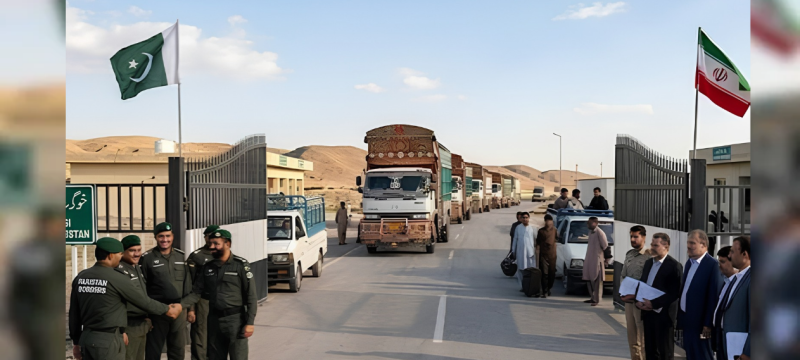
On October 17, Pakistan suspended trade activities at the Taftan and Gabd-Rimdan crossings in Balochistan. Provincial authorities cited security concerns as the reason for the decision.
Iran, however, attributed the disruption to technical problems on the Pakistani side. The differing explanations added uncertainty surrounding the closure.
The restrictions left hundreds of trucks stranded near the crossings. They also disrupted the movement of liquefied petroleum gas (LPG) into Pakistan.
Pakistan imports approximately 7,000 tonnes of LPG from Iran daily. More than 4,000 tonnes reportedly enter through the Gabd-Rimdan crossing alone.
The disruption therefore raised concerns about the supply of essential goods. A prolonged closure could create additional difficulties for importers and transport companies.
US Reportedly Seeks Wider Border Restrictions
The United States has reportedly asked countries bordering Iran to close their crossings. According to an AFP report, Washington wants to extend its pressure campaign beyond Iranian seaports.
Iraq also closed its Sheeb crossing with Iran on October 21. These developments have drawn further attention to regional trade routes and their importance to neighbouring countries.
The reported US request places Pakistan in a difficult position. Islamabad must consider its international commitments while managing its economic and trade interests.
However, Pakistan has not publicly confirmed that American pressure directly caused the October 17 closures.
What Pakistan Says About US Sanctions
Pakistan’s Foreign Office has addressed questions about the country’s position on international sanctions.
When asked whether American pressure influenced the border closures, spokesperson Sajjad Haider Khan did not provide a direct answer.
He stated that Pakistan follows, and will continue to follow, all applicable sanctions regimes.
His remarks did not clarify whether the restrictions on the Iran Border crossings were connected to Washington’s reported demands.
The issue has also generated discussion on social media. Iranian academic Seyed Mohammad Marandi claimed on X that Pakistan was facing pressure from US President Donald Trump to close its border with Iran.
However, Pakistan’s official statements have not directly confirmed that claim.
Gabd-Rimdan Crossing Reopens for Essential Supplies
Despite the earlier restrictions, Pakistan has reopened the Gabd-Rimdan crossing for LPG tankers and essential goods.
The development offers some relief to traders and transporters affected by the disruption. It also allows important supplies to move across the border again.
However, the reopening does not necessarily mean that all trade activities have returned to normal.
The status of regular commercial movement remains uncertain. Traders will be watching for further announcements about the remaining restrictions and the resumption of routine operations.
What Happens Next?
Pakistan’s handling of the Iran Border situation could affect trade, energy supplies, and relations with neighbouring countries.
The United States wants stronger restrictions on Iran’s access to international trade routes. Meanwhile, Pakistan faces the challenge of balancing its international obligations with domestic supply needs.
In other news read more about Oil prices jump $3 On Houthi Attacks, Oil Spill, Highest Settlement Since April
For now, the reopening of Gabd-Rimdan for essential goods provides a limited resumption of cross-border movement. Further official decisions will determine when normal trade can fully resume.