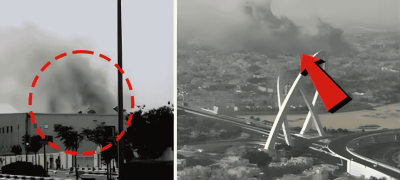


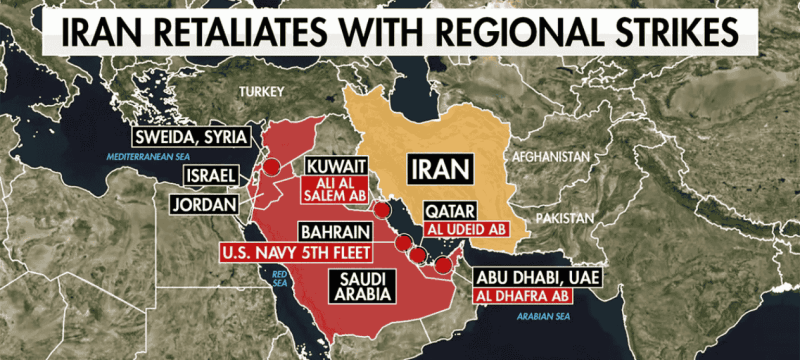
Iran has launched simultaneous attacks on nine countries, including several wealthy Gulf countries, following Israel’s strike on the South Pars gas field. This marks one of the most intense retaliatory campaigns in the ongoing conflict.
The attacks hit central Israel with ballistic missiles and cluster munitions, killing two civilians in Ramat Gan. Four Palestinian women in the West Bank were also struck by Iranian missiles.
Qatar’s Ras Laffan LNG hub, one of the world’s largest gas facilities, was targeted by 14 ballistic missiles. QatarEnergy confirmed extensive damage, though emergency teams are responding quickly to contain the situation.
Multiple Gulf countries, including the UAE and Saudi Arabia, faced missile and drone strikes. Over a dozen missiles and 27 drones were intercepted over the Emirates. In Saudi Arabia, evacuations were ordered at the Samref Refinery and Jubail Petrochemical Complex as missile defenses intercepted incoming threats.
The U.S. 5th Fleet headquarters in Bahrain continues to face persistent attacks, while industrial zones in Oman were hit by drone strikes, resulting in casualties among workers. Oman, previously spared from direct conflict, is now part of the escalating situation.
Jordan and Iraq also experienced assaults. American bases in Jordan were targeted, and nightly drone attacks hit the U.S. Embassy in Baghdad. The conflict has rapidly expanded to multiple fronts, intensifying regional tensions.
The total GDP per capita of the targeted Gulf countries now exceeds $417,000, making this one of the boldest multi-nation strikes in recent history. Despite facing economic challenges at home, Iran has directly attacked some of the wealthiest nations, executing Operation Madman with precision.
Analysts warn that the attacks on key energy and industrial hubs in Gulf countries could have long-term impacts on global energy markets. Security and defense measures remain heightened as regional governments coordinate responses.
The strikes underscore Iran’s willingness to escalate tensions despite domestic economic collapse. Global powers are closely monitoring the situation, while Gulf nations strengthen defenses to prevent further disruption.
This unprecedented series of attacks highlights the vulnerability of critical infrastructure in the region and signals a dangerous escalation in Middle East hostilities.
In other news read more about: Iran Warns Gulf States Against Permitting Airspace for Israeli Attacks