


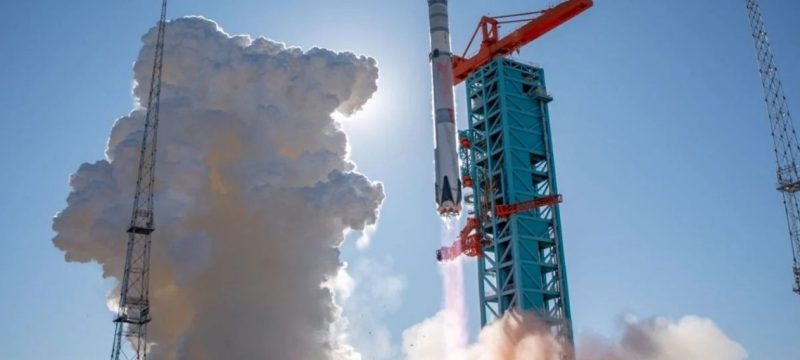
China’s private space startup, LandSpace, is emerging as a competitor to Elon Musk’s SpaceX in the global aerospace sector. The company is making headlines for testing reusable rockets, a field long dominated by Musk’s innovations.
Earlier this month, LandSpace conducted its first reusable rocket test with the Zhuque-3 rocket. While the test ended in failure, the company remains determined to push China’s commercial space ambitions forward. The startup’s focus on reusability and rapid iteration mirrors SpaceX’s approach, inspiring engineers like chief designer Dai Zheng to join the project.
LandSpace aims to offer low-cost launch solutions for China, similar to SpaceX’s Falcon 9 rocket. This is crucial for Beijing’s plan to deploy 10,000 satellites in the coming decades. By embracing the risk of failure, LandSpace is breaking away from China’s traditional, cautious space program, which has historically prioritized state-owned, low-risk projects.
The company’s startup culture marks a significant shift in China’s aerospace industry. Reports suggest that both LandSpace and state-owned firms are adopting a more experimental attitude toward rockets and space missions. Experts note that this willingness to take risks could accelerate China’s innovation in reusable launch technologies.
LandSpace is preparing for another launch after the December failure of Zhuque-3. The company draws lessons from SpaceX, whose Falcon booster succeeded after multiple failed attempts. Persistence and iteration are now seen as key to breakthroughs in China’s rocket industry.
To attract investment and expand its operations, LandSpace plans to go public while carving out a niche in commercial spaceflight. Analysts say the startup’s ambition signals a new era for Chinese rockets, potentially transforming the country’s role in global space exploration.
In other news read more about: China Sanctions US Defence Firms Over Taiwan Arms Deal
With continued tests and lessons learned from both failures and successes, LandSpace aims to compete with SpaceX while shaping the future of reusable rocket technology in China.