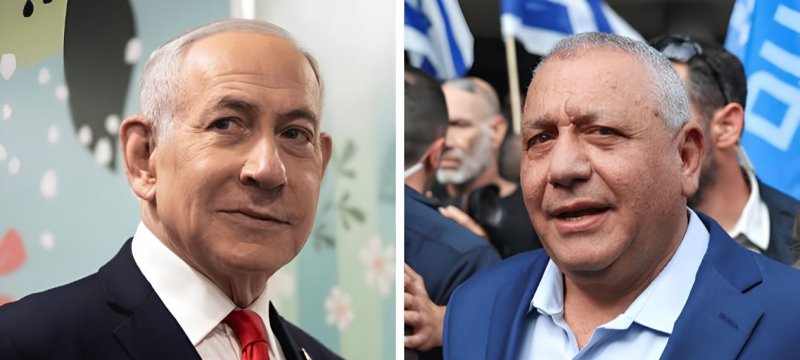
Israeli Prime Minister Benjamin Netanyahu has rejected the possibility of forming a government with Arab-led political parties after Israel’s October 27 parliamentary elections left his political bloc short of a majority.
The election results have created uncertainty over Israel’s next government, with Arab-led parties securing a historic 19 seats in the 120-member Knesset.
Netanyahu expressed his opposition to working with these parties in a post on social media platform X, stating that forming a government with them was unacceptable.
His position comes as his Likud-led political bloc faces difficulties securing the 61 parliamentary seats required to form a government.
The results have also intensified political tensions between Likud and Arab-led political groups, which could influence the upcoming coalition negotiations.
Netanyahu Rules Out Government With Arab-Led Parties
Netanyahu has firmly opposed any political arrangement involving Arab-led parties.
In his statement on X, he wrote, “It is forbidden to form a government with them.”
His remarks followed a strong electoral performance by Arab-led political groups, increasing their influence over discussions about Israel’s next government.
The Joint List and Ra’am emerged as important political forces after securing a combined 19 seats.
Their parliamentary strength could become particularly significant because neither Netanyahu’s bloc nor the main opposition grouping secured enough seats to govern independently.
However, Netanyahu’s statement indicates that he is unwilling to rely on Arab-led parties to secure a parliamentary majority.
Likud Accuses Arab Parties of Election Theft
Netanyahu’s Likud party has also raised allegations against Arab-led political groups following the election results.
The party claimed that Arab-led groups had stolen the election, raising questions about alleged electoral misconduct and foreign interference.
However, these accusations have not been supported by publicly established evidence of widespread election fraud.
Israel’s Central Elections Committee has rejected claims of systematic voting irregularities and stated that its investigation would not change the final distribution of parliamentary seats.
The controversy has added another layer of tension to an already difficult government formation process.
Arab Parties Secure Historic 19 Seats in Israeli Elections
Arab-led political parties achieved their strongest parliamentary performance in Israel’s latest election.
According to the completed vote count, the Joint List secured 11 seats, while Ra’am won eight seats in the 120-member Knesset.
Their combined representation increased to 19 seats, making them potentially influential in the formation of the next government.
The final distribution of seats among the major political groupings is as follows:
- Netanyahu’s governing bloc: 53 seats
- Main opposition bloc: 48 seats
- Arab-led parties: 19 seats
A political bloc needs at least 61 seats to secure a majority in the Knesset.
The results therefore leave both major political groupings short of the numbers required to govern independently.
Israel Faces Uncertainty Over Next Government
The election outcome has opened the door to complicated coalition negotiations.
Netanyahu’s bloc remains the largest political grouping, but its 53 seats are insufficient to secure a parliamentary majority.
Meanwhile, the opposition grouping led by Gadi Eisenkot has 48 seats and could explore different political arrangements to form a government.
The 19 seats held by Arab-led parties could become important in these negotiations.
However, opposition leaders have also faced political disagreements over whether to cooperate with the Joint List and Ra’am.
Israel’s Central Elections Committee has completed the vote count, while formal certification of the results is expected on November 4, 2026.
The new Knesset is scheduled to be sworn in on November 10.
In other news read more about: Israel Election 2026: Netanyahu Faces Political Deadlock
For now, Netanyahu’s rejection of an alliance with Arab-led parties and the divided parliamentary results have left Israel facing an uncertain government formation process.