


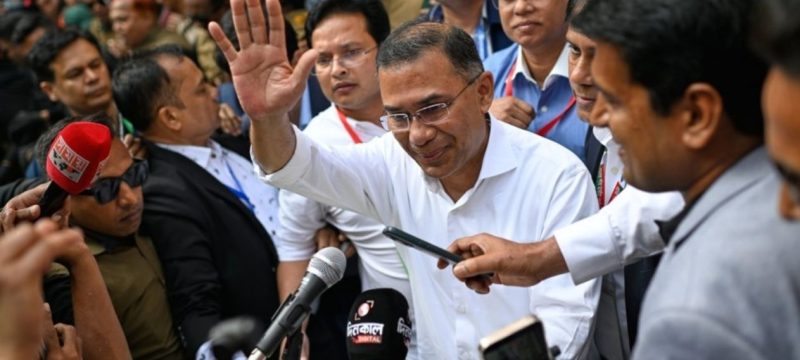
Bangladesh’s prime minister-in-waiting, Tarique Rahman, on Saturday dedicated his election win to those who “sacrificed for democracy.” His remarks came after the first national polls since the deadly 2024 student uprising.
Rahman, 60, chief of the Bangladesh Nationalist Party (BNP) and member of a prominent political family, swept the elections on Thursday. He will now lead Bangladesh, home to 170 million people, following years of political turmoil.
“This victory belongs to Bangladesh, belongs to democracy,” Rahman said in his first speech after the vote. “It belongs to people who aspire to and have sacrificed for democracy.”
He will take office after an interim government managed the country following the student-led uprising, which ended the long rule of former Prime Minister Sheikh Hasina in August 2024.
Rahman’s triumph marks a major political comeback. He returned to Bangladesh in December after 17 years in exile in Britain, far from Dhaka’s political challenges. The BNP-led alliance secured 212 seats, while the Jamaat-e-Islami-led alliance won 77, according to the Electoral Commission.
Jamaat chief Shafiqur Rahman initially questioned the vote, alleging inconsistencies, but later accepted the results. He pledged to serve as a principled opposition while highlighting his party’s gains.
Sheikh Hasina’s Awami League was barred from participating. Hasina, sentenced to death in absentia, condemned the election from India, calling it “illegal and unconstitutional.”
Rahman urged national unity despite political differences. “Our paths and opinions may differ, but in the interest of the country, we must remain united,” he said. He also praised Bangladesh’s “freedom-loving, pro-democracy” citizens for supporting the BNP.
International reactions were largely positive. The US congratulated Rahman on the “historic victory,” while India called it a “decisive win.” China and Pakistan also extended congratulations. European Union observers labeled the elections “credible.”
The polls also included a referendum approving reforms to strengthen democracy, including term limits for the prime minister, a new upper house, and enhanced judicial independence.
In other news read more about: Bangladesh Opposition Party Accepts Defeat in General Election
Rahman acknowledged the challenges ahead. “We begin our journey with a fragile economy, weakened institutions, and law and order issues,” he said, signaling a focus on rebuilding the country under democratic principles.