


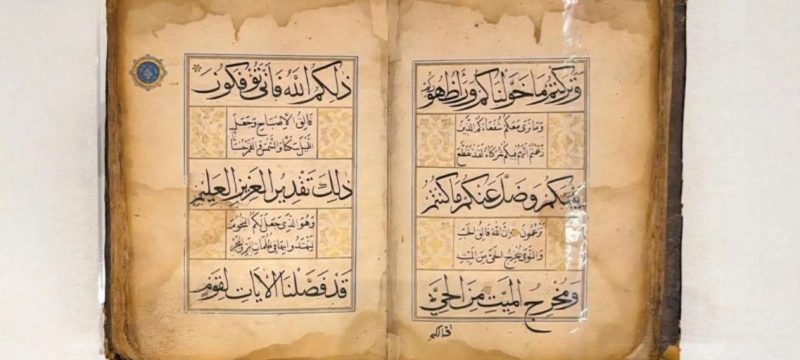
MAKKAH – A rare 18th-century Quranic manuscript is on display at Makkah’s Holy Quran Museum. The exhibit is being held at the Hira Cultural District.
The historic manuscript offers visitors an opportunity to explore the tradition of handwritten Qurans. It also highlights the development of Arabic calligraphy over the centuries.
The Quranic manuscript was written using black ink. Its pages feature carefully placed diacritical marks that enhance the written text.
The manuscript also contains detailed floral designs. These decorative elements reflect the artistic traditions used by manuscript makers during that period.
Its calligraphy features distinctive styles that demonstrate the skills of earlier scribes. The careful writing and decoration show the attention given to Quranic manuscripts.
The exhibition provides a look at the methods used to preserve and present religious texts. It also highlights the cultural importance of handwritten Qurans.
Visitors can observe the manuscript’s writing style and decorative details. The display offers insight into the relationship between calligraphy and traditional Islamic art.
The Quranic manuscript represents an important example of historical Islamic writing. Its features provide clues about artistic practices from the 18th century.
The use of floral motifs adds an artistic dimension to the manuscript. Such designs were often used to enhance the visual presentation of historic texts.
The precise diacritical marks are another notable feature of the exhibit. They demonstrate the care taken in recording Quranic text by hand.
The museum display also allows visitors to learn about the history of Arabic calligraphy. Calligraphy has long held an important place in Islamic artistic traditions.
Handwritten Qurans were produced by skilled scribes before modern printing methods became widespread. Their creation required considerable time, precision and artistic ability.
The exhibition at the Hira Cultural District connects visitors with this longstanding tradition. It brings together religious history, manuscript art and Arabic calligraphy.
The rare Quranic manuscript is being presented as part of efforts to showcase Islamic heritage. Such displays help preserve knowledge about historic writing and artistic techniques.
The exhibit also provides an educational experience for visitors. It allows them to examine the details of an original historic manuscript.
The black ink, decorative motifs and calligraphic styles make the manuscript distinctive. Together, these elements reflect the craftsmanship of its era.
The Holy Quran Museum continues to provide visitors with opportunities to explore Quranic history. Its exhibitions highlight different aspects of Quranic manuscripts and related artistic traditions.
The current display offers a closer look at an 18th-century Quranic manuscript. It demonstrates how religious texts were carefully written and decorated in earlier periods.
The exhibition at the Hira Cultural District adds another cultural attraction for visitors in Makkah. It also highlights the lasting importance of Arabic calligraphy and manuscript preservation.
In other news read more about Hajj 2027: Government Scheme Applications Expected in August
The Quranic manuscript provides a valuable connection between visitors and centuries-old Islamic heritage. Its display allows the craftsmanship of earlier generations to be appreciated today.