

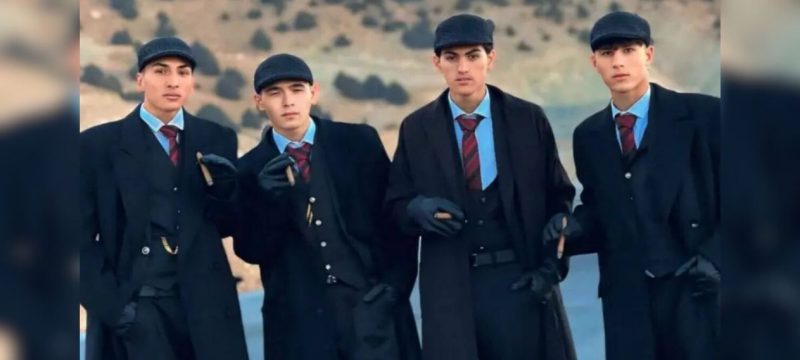
Authorities in Afghanistan’s Herat province have arrested four young men for dressing like characters from the British TV show Peaky Blinders. The incident has sparked discussion on social media, with many people reacting to how the Herat youth were treated for their choice of clothing.
According to Saif-ul-Islam Khyber, spokesman for the Taliban’s Ministry for the Promotion of Virtue and Prevention of Vice, the arrests took place in Jibraeel Township. He stated that the Herat youth were detained for “promoting foreign culture,” which the authorities believe goes against local traditions.
Photos of the young men had been circulating online for several days. The images showed the Herat youth wearing long coats and flat caps, similar to the outfits worn by characters from the Shelby family in Peaky Blinders. Their appearance quickly gained attention on Afghan social media platforms.
In a recent interview on a YouTube channel, the arrested youths explained the reason behind their fashion choice. They said they admired the clothing style after watching the show and enjoyed wearing it in public. One of the young men said they had even received positive feedback from the local community. He added that they planned to promote traditional clothing from different Afghan ethnic groups in the future.
However, Taliban officials rejected their explanation. The spokesperson said the outfits were against “Islamic values and Afghan culture.” He also shared a video in which one of the detained men expressed regret for his choice of clothing. The video has raised questions about whether the confession was voluntary.
This is not the first time the Taliban have taken action over dress-related issues. In the past, authorities in several provinces have arrested dozens of individuals for what they consider violations of the dress code.
In other news read more about RSF Attack in Sudan’s Kalogi Kills 116, Including 46 Children — Horror in South Kordofan
The latest arrests highlight the growing concerns among Afghans about cultural expression and personal freedom under Taliban rule. Many activists say such actions may further limit creative expression among the youth, who already face restrictions in education, employment, and public engagement.