

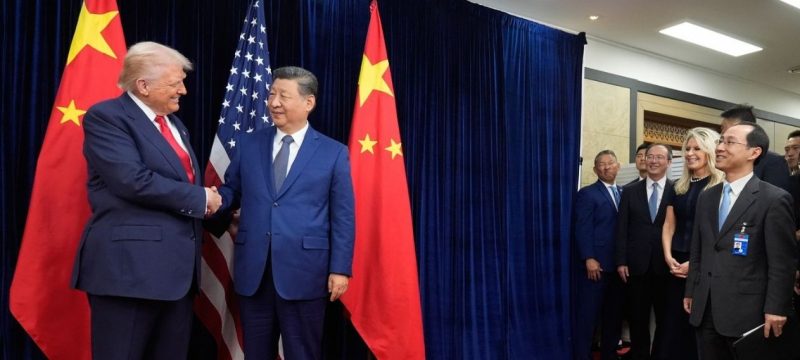
US President Donald Trump and Chinese President Xi Jinping have begun crucial talks in South Korea, aiming to reduce trade tensions between the world’s two largest economies.
The summit, held in the port city of Busan, also focuses on potential collaborations in artificial intelligence, energy, and infrastructure projects. Both leaders exchanged friendly but strategic remarks as discussions began.
Trump called Xi a “tough negotiator” but praised him as a “great leader of a great country.” He added, “I think we’re going to have a fantastic relationship for a long period of time, and it’s an honor to have you with us.”
Xi Jinping responded warmly, saying, “It feels very warm to see you again,” while acknowledging that occasional frictions between the United States and China are natural for two major global powers. Xi also emphasized that China’s development aligns with Trump’s vision to “Make America Great Again.”
The Chinese president highlighted the importance of cooperation and global diplomacy. He praised Trump’s diplomatic role in achieving the Gaza ceasefire and promoting peace between Cambodia and Thailand. “China and the US can jointly shoulder our responsibility as major countries and work together for the good of both nations and the world,” Xi stated.
Trump also reaffirmed his confidence in achieving meaningful progress. During a photo session, he said, “He’s a very tough negotiator,” referring to Xi, and hinted at a potential trade deal, saying only, “Could be.”
Meanwhile, US Commerce Secretary Howard Lutnick announced that South Korea would invest $200 billion in projects including an 800-mile Alaska natural gas pipeline, AI development, and energy infrastructure. This comes after Seoul’s earlier $350 billion commitment to US investments, which secured lower tariffs and supported shipbuilding operations.
In other news read more about South Korea Honors Trump With Gold Crown And Its Highest Civilian Award
The Busan summit in South Korea marks a critical moment in US-China relations. Analysts say the outcome could shape global markets, influence energy policies, and redefine the balance of trade between the two economic giants.