

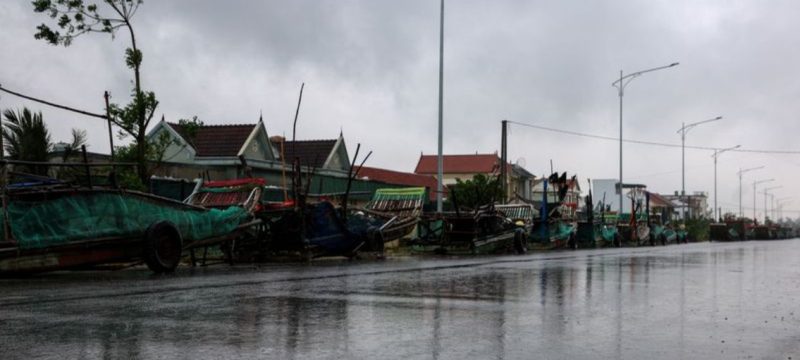
Typhoon Bualoi struck Vietnam’s central coast on Monday, causing heavy damage and loss of life. At least eight people died, and 17 remain missing after the storm made landfall with winds reaching up to 117 km/h.
The typhoon brought flooding rains, powerful waves, and widespread blackouts. Thousands of homes were damaged, and large agricultural fields were submerged. Many of the missing are fishermen from Quang Tri province whose boats were caught in rough seas. Fatalities were reported across multiple provinces, including Ninh Binh, Hue, and Thanh Hoa.
Authorities evacuated more than 28,000 residents before the storm arrived, and four coastal airports were shut down to ensure safety. Roads, power lines, and homes suffered major damage, while nearly 1,400 hectares of rice fields were left underwater.
Although Typhoon Bualoi weakened as it moved inland toward Laos, dropping wind speeds to about 74 km/h, heavy rainfall continued. Officials have warned of possible flash floods and landslides in the coming days. Disaster management teams are still searching for the missing, and emergency crews are working to restore essential services in affected areas.
Vietnam’s disaster agency confirmed that most of the deaths were caused by flooding, collapsing structures, and falling trees. The government had issued early warnings, allowing time for evacuations and airport closures, but the storm still left a trail of destruction across central provinces.
While industrial zones appear to have escaped major damage, losses in agriculture and housing are severe. The impact highlights the vulnerability of Vietnam’s coastal communities to increasingly frequent and powerful storms.
The devastation caused by Typhoon Bualoi comes at a time when natural disasters continue to disrupt lives and infrastructure worldwide. Recently, a tech outage at Canadian airports also highlighted how unexpected crises, whether natural or technical, can affect thousands of people at once.
As recovery efforts continue, officials remain on high alert for further rain and potential landslides. The search for missing fishermen and the restoration of essential services are the immediate priorities, while long-term rebuilding will likely take months.