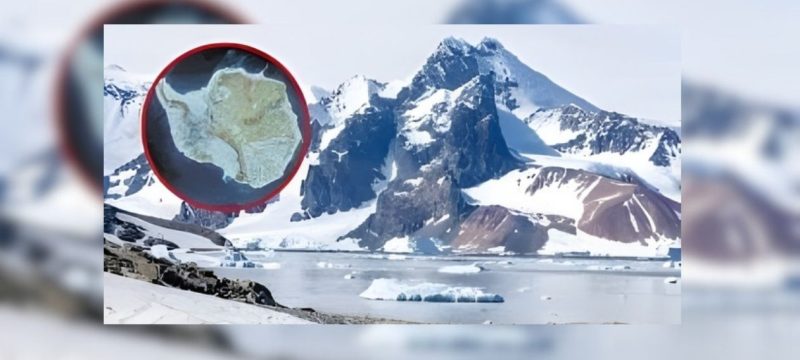
Scientists have unveiled the most detailed map of the land beneath Antarctica’s vast ice sheet.
The map reveals mountains, valleys, plains, and other features hidden under thick ice.
It provides crucial insights into how Antarctica’s ice may respond to climate change.
Researchers combined satellite data with glacier movement records to estimate the continent’s sub-ice topography.
The map identifies tens of thousands of features, including towering mountains and deep canyons.
Rolling hills and plains were also detected, showing a complex hidden landscape.
Glaciologist Robert Bingham from the University of Edinburgh co-led the study.
He emphasized that accurate mapping of the bedrock is essential to understanding ice flow dynamics.
“The most accurate map of Antarctica’s bed shape allows better projections of ice movement and sea-level rise,” he said.
The shape of Antarctica’s bedrock affects friction against moving ice.
This friction influences how quickly ice flows toward the ocean and melts.
As ice melts, it contributes to rising global sea levels.
Antarctica is enormous, about 40 percent larger than Europe and 50 percent larger than the United States.
Its hidden topography plays a key role in global environmental predictions.
Understanding the continent’s structure helps refine models of climate change and melting patterns.
The new map also provides a foundation for studying ice-sheet dynamics.
It allows scientists to model how warming temperatures could affect ice loss.
Researchers can now better predict which areas of Antarctica are most vulnerable to melting.
This map is expected to improve global climate models and inform policy decisions.
It highlights the importance of detailed data in preparing for future sea-level rise.
Scientists say ongoing research in Antarctica will continue to reveal insights about Earth’s changing climate.
In other news read more about Methane Leaks Discovered in Antarctica Raise Fears of Faster Global Warming
By combining satellite technology with glacier studies, researchers now have the clearest view yet of Antarctica’s hidden world.