


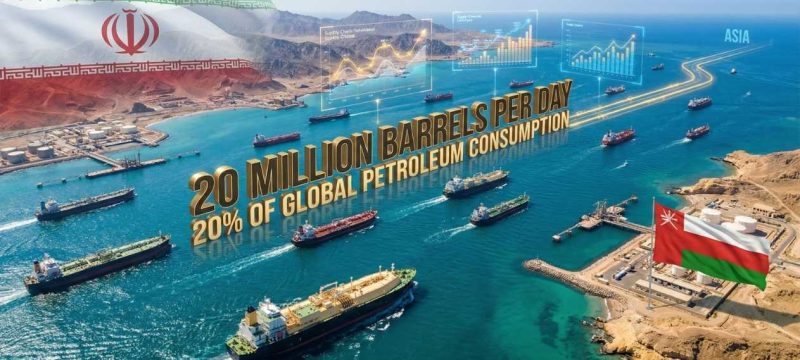
Global shipping has slowed sharply as fears grow over a possible Hormuz Closure. The situation escalated after Iran launched attacks on vessels in the Strait of Hormuz. The move came in response to recent U.S. and Israeli strikes.
The Strait of Hormuz lies between Iran and Oman. It is one of the world’s most important oil routes. Around one-fifth of global oil passes through this narrow waterway. Large volumes of liquefied natural gas (LNG) also move through the strait daily.
Shipping activity has nearly stopped following reported attacks on vessels in the area. Iranian media said a senior Revolutionary Guards official declared the strait closed. He warned that any ship attempting to pass could face military action. This statement increased fears of a prolonged Hormuz Closure.
The disruption has sent energy markets higher. Brent crude prices have climbed nearly 10% this week. Traders reacted to supply concerns and shutdowns at oil and gas facilities across the region.
Freight rates for very large crude carriers (VLCCs) have reached record levels. The benchmark TD3 route, which carries oil from the Middle East to China, rose to Worldscale 419. This equals about $423,736 per day, according to LSEG data. Rates have doubled since Friday, reflecting rising risks and limited vessel supply.
The shipping crisis worsened after reports that Iran responded to U.S. and Israeli strikes by targeting Gulf assets. Precautionary shutdowns followed at several oil and gas sites. These closures added to fears of a lasting Hormuz Closure.
LNG shipping rates also jumped sharply. Daily Atlantic LNG tanker rates rose 43% to $61,500. Pacific rates increased 45% to $41,000 per day, according to Spark Commodities. Analysts warn that rates could exceed $100,000 per day if vessel shortages continue.
Qatar’s decision to halt production added pressure to LNG markets. Qatar is one of the world’s top LNG exporters. Supply disruptions from the country have tightened global availability.
Fuel supply has also been affected at Fujairah in the United Arab Emirates. Bunker sales at the major port have slowed. Prices have increased as a result. Some shipping demand may shift to other hubs like Singapore.
Shipping companies are now reviewing emergency plans. Hyundai Glovis said it is preparing alternative routes and ports. South Korea’s maritime ministry has advised local shippers to avoid business in the region.
In other news read more about: Energy and Embassies in the Crossfire as Iran Escalates Regional War
Industry experts say shipping will remain limited until safe passage is guaranteed. With tensions still high, markets remain focused on the risk of continued disruption in one of the world’s key energy corridors.