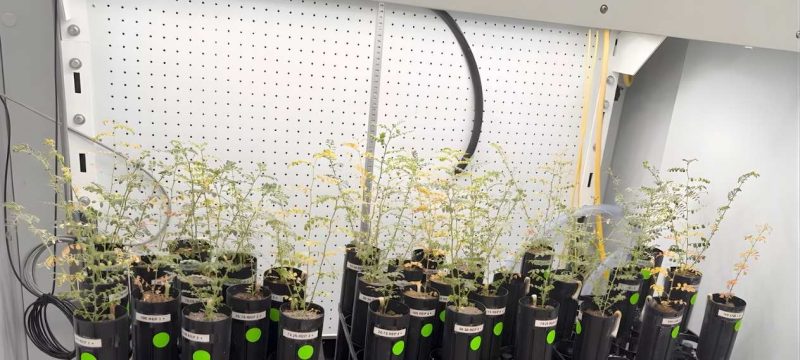
Scientists have taken a major step toward lunar agriculture by growing chickpeas in soil that mimics the moon’s surface. The breakthrough could help astronauts produce food on long-term lunar missions.
Researchers at Texas A&M University used a variety of chickpeas called “Myles” and planted them in a mix of simulated lunar soil, known as regolith, and nutrient-rich vermicompost. The seeds were coated with beneficial fungi, which helped the plants absorb nutrients and reduce heavy metal uptake.
Harvestable chickpeas grew successfully in soil mixtures containing up to 75% lunar simulant. As the proportion of moon soil increased, fewer chickpeas produced flowers and seeds, but the size of the harvestable plants remained stable. Plants grown in 100% lunar simulant did not survive.
“Chickpeas are high in protein and other nutrients, making them a strong candidate for space crops,” said Jessica Atkin, a NASA fellow and lead author of the study published in Scientific Reports.
Scientists note that having a local food source is vital for sustaining future moon bases. Transporting all food from Earth is expensive, and survival on the moon cannot rely solely on shipments from Earth. Plants could also provide oxygen and support life systems for astronauts.
The lunar soil used is mostly crushed rock and dust formed over billions of years. While it contains some nutrients, it is inorganic and harsh compared to Earth soil. Adding compost and fostering plant-microbe partnerships allowed the chickpeas to grow successfully. The fungi colonized roots even in pure regolith, helping condition the soil and reduce stress on the plants.
Testing of the chickpeas continues, especially for metal accumulation, to ensure they are safe for consumption. Scientists hope these crops could one day be part of a sustainable food supply on the moon or Mars.
In other news read more about Scientists Develop Glass Storage to Preserve Data for 10,000+ Years
“This small step proves growing crops on the moon is feasible,” said co-author Sara Oliveira Santos. “We are moving in the right direction for extraterrestrial agriculture.”