


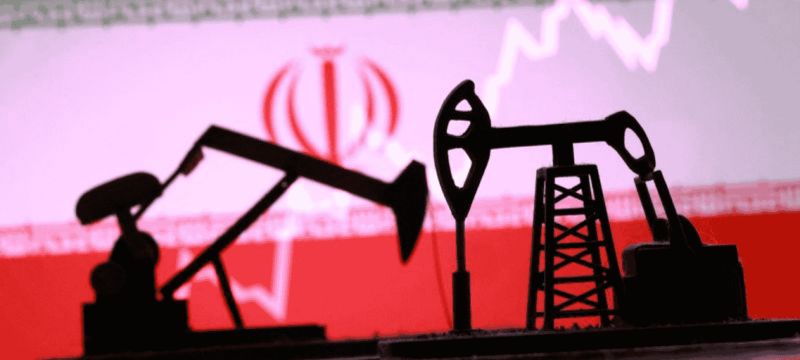
Oil rises on Tuesday as supply fears mount following Iran’s denial of talks with the United States. This contradicts U.S. President Donald Trump’s statement that a deal could be reached soon.
Brent crude futures rose $2.89, or 2.9%, to $102.83 a barrel at 0710 GMT. U.S. West Texas Intermediate (WTI) climbed $2.49, or 2.8%, to $90.62 a barrel. The gains follow a sharp drop of more than 10% on Monday after Trump ordered a five-day delay on attacks targeting Iranian power plants.
Analysts said Monday’s decline removed much of the “war premium” from oil prices. “Today’s moderate bounce shows the market finding its footing,” said Tim Waterer, chief market analyst at KCM Trade. “Traders know the Strait of Hormuz remains a risky passage.”
The ongoing conflict has disrupted nearly one-fifth of global oil and liquefied natural gas shipments through the Strait of Hormuz. Despite tensions, two tankers bound for India passed through the strait on Monday.
Tehran rejected U.S. claims of contact, calling them a market manipulation attempt. Iran’s Revolutionary Guards said they attacked U.S. targets and described Trump’s comments as “worn-out psychological operations.”
Macquarie analysts said that even with potential tension relief, oil prices could maintain a floor of $85–$90 per barrel. Brent may drift back to $110 until shipping through the Strait of Hormuz stabilizes. If the strait remains restricted until the end of April, Brent could reach $150 a barrel.
Recent attacks targeted energy infrastructure in Iran. A gas company office and a pressure-reduction station in Isfahan were hit, while a projectile struck a gas pipeline feeding a power station in Khorramshahr.
To ease supply shortages, the U.S. temporarily waived sanctions on Russian and Iranian oil already at sea. Traders offered Iranian crude to Indian refiners at a premium to ICE Brent. The International Energy Agency is consulting Asian and European governments on potential releases from strategic reserves if needed.
Experts warned that oil rises may continue due to supply concerns. Analysts said disruptions are likely until at least April, supporting Brent prices and contributing to inflation pressures globally.
The energy sector continues to monitor geopolitical risks closely as the U.S.–Israel–Iran conflict evolves, affecting global oil markets and economic stability.
In other news read more about: Oil Rises Amid Middle East Tensions And Attacks On Energy Facilities