


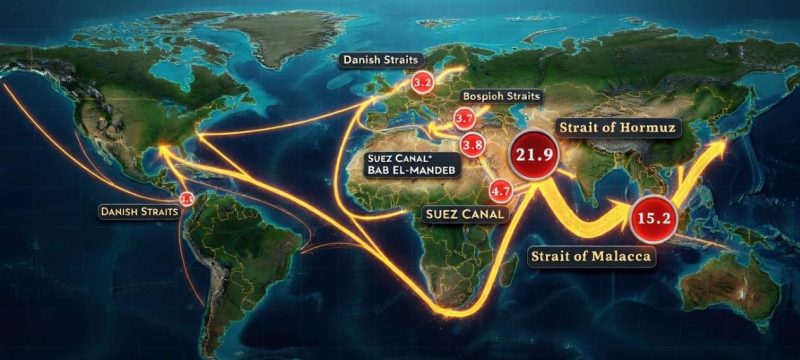
More than 90% of Global Oil trade moves through a small number of critical maritime routes. These narrow passages, often called chokepoints, play a major role in energy supply worldwide. Any disruption in these areas can quickly affect global markets.
Experts say there are eight main routes that handle most Global Oil shipments. These include important straits and canals connecting major oceans and regions. Their strategic importance makes them vital for both producing and consuming countries.
One of the most important routes is the Strait of Hormuz. It connects the Persian Gulf to the open sea. A large share of Global Oil exports passes through this narrow waterway every day. Another key route is the Strait of Malacca, which links the Indian Ocean with the Pacific Ocean.
The Suez Canal is also a major transit point. It allows ships to move between Europe and Asia without traveling around Africa. Similarly, the Bab el-Mandeb Strait connects the Red Sea to the Gulf of Aden. These routes help ensure the smooth flow of oil shipments.
Other important passages include the Bosphorus Strait and the Panama Canal. Each of these routes handles significant oil traffic. Together, they form the backbone of global energy transportation.
However, these narrow routes are also vulnerable. Political tensions, conflicts, or accidents can disrupt shipping. Even a short delay can impact oil prices and supply chains. This makes these chokepoints a major concern for global energy security.
Governments and international organizations closely monitor these routes. Efforts are made to ensure safe and uninterrupted passage for oil tankers. Naval patrols and security measures are often increased in high-risk areas.
The heavy reliance on a few routes highlights a key challenge. While they offer efficient transport, they also create risk. Diversifying routes and improving infrastructure are often suggested as solutions.
The importance of Global Oil transport continues to grow as demand remains high. Countries depend on stable supply to support industries and daily life. Any disruption can have wide economic effects.
In other news read more about: Oil Rises On Supply Concerns Amid Iran-U.S. Tensions
In conclusion, these eight narrow routes are essential for global oil trade. They connect producers and consumers across continents. Protecting these chokepoints is crucial for maintaining a stable energy supply worldwide.