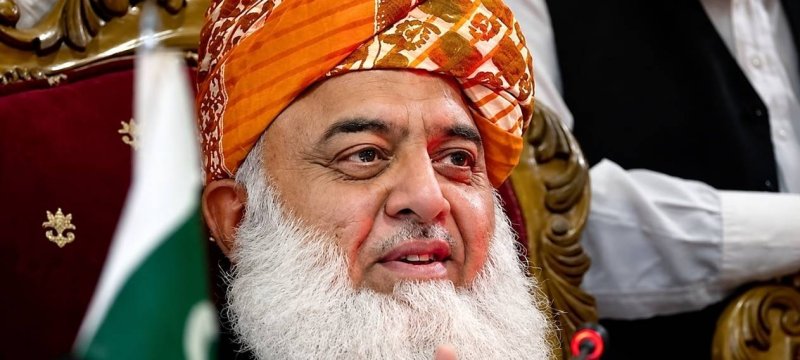
Politics in Pakistan is challenging. Many leaders struggle to remain influential over time, but Maulana Fazlur Rehman has remained an active figure in national politics for more than four decades. His supporters often credit his political experience, patience, and ability to maintain relationships with different political parties.
Leading a Party at 27
Maulana Fazlur Rehman entered a new phase of his political life after the death of his father, Mufti Mahmud, in 1980. At just 27 years old, he took on a leading role in the Jamiat Ulema-e-Islam (JUI).
It was a challenging period for the party. During the 1980s, differences emerged over political strategy and relations with General Zia-ul-Haq’s government. These disagreements contributed to a division within the party, and the faction led by Fazlur Rehman became known as JUI-F.
Over time, he built his political position through party organisation, parliamentary participation, and engagement with other political leaders.
His Work in Parliament
Fazlur Rehman has held several important parliamentary positions during his career. He chaired the National Assembly’s Standing Committee on Foreign Affairs during Benazir Bhutto’s first government in the 1990s.
From May 2004 to November 2007, he served as Leader of the Opposition in the National Assembly. This position placed him at the centre of parliamentary debate and political consultation.
He also served as Secretary General of the Muttahida Majlis-e-Amal (MMA), an alliance of religious parties that performed strongly in the 2002 general election and formed the provincial government in the then North-West Frontier Province, now Khyber Pakhtunkhwa.
These roles demonstrate his long involvement in parliamentary politics and his experience in bringing different political groups together around shared objectives.
A Leader Who Values Dialogue
One of the defining features of Fazlur Rehman’s political career has been his willingness to engage with different parties. His political relationships have included the Pakistan Peoples Party (PPP) and the Pakistan Muslim League-Nawaz (PML-N), although their positions have not always been the same.
His political approach has included periods of cooperation, opposition, and consultation, depending on the circumstances.
In Pakistan’s parliamentary system, discussions between political leaders can play an important role in building consensus and resolving disagreements. Fazlur Rehman’s continued participation in political consultations reflects the importance of dialogue in the country’s political process.
His experience also shows how political relationships can evolve as governments change and new national challenges emerge.
His Voice on National and International Issues
Beyond parliamentary politics, Fazlur Rehman has spoken on several national and international issues. He has expressed support for the Palestinian people and announced public demonstrations in solidarity with Gaza.
He has also emphasised the importance of traders and small businesses, describing their contribution as essential to Pakistan’s economy. In his public statements, he has highlighted economic concerns and the need to address challenges affecting ordinary citizens.
Khyber Pakhtunkhwa has also remained an important part of his political focus. He has spoken about the province’s need for stability and the importance of addressing its political and economic challenges through consultation.
These positions illustrate his engagement with issues extending beyond party politics.
Why He Remains an Important Political Figure
Maulana Fazlur Rehman’s political journey has included government, opposition, electoral challenges, and changing alliances. Across these different periods, he has continued to participate in Pakistan’s political process.
His career offers an example of how party organisation, parliamentary experience, political relationships, and consistent engagement can sustain a leader’s presence over many years.
For his supporters, his longevity reflects patience and political experience. More broadly, his journey highlights the role that dialogue, parliamentary participation, and negotiation play in Pakistan’s democratic system.
After more than four decades in politics, Maulana Fazlur Rehman remains a recognised figure in the country’s political landscape, with a career shaped by changing circumstances and an enduring presence in national affairs.