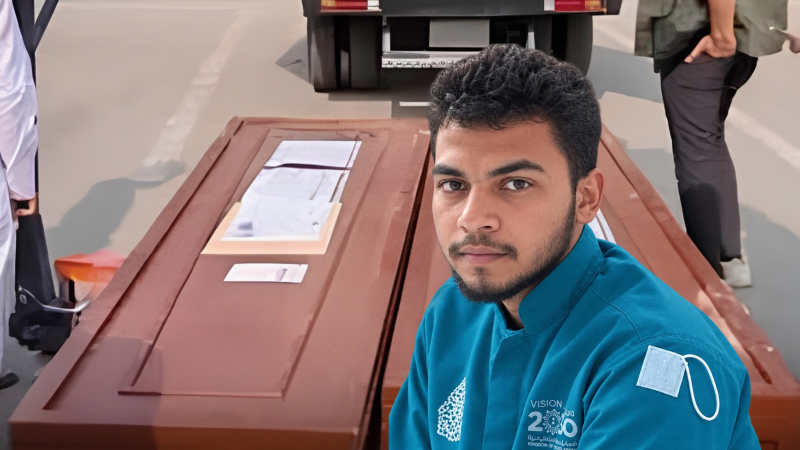
On October 14, 2026, Saudi Arabia carried out a Saudi Arabia execution of two Bangladeshi nationals, Nazrul Islam Abdul Basir and Siti Akhtar (identified in Bangladeshi records as Sweety Akhtar), over what authorities called “indecent acts” inside a mosque in Mecca. The Interior Ministry has not said what the acts were or what evidence was presented. Here is what has been confirmed, what hasn’t, and which international legal questions the case raises.
Timeline
- Date not public: the two are arrested. By the account of Nazrul’s father, he had been imprisoned for over three years.
- During custody: they are charged and referred to a court, which convicts and sentences them to death under ta’zir, a discretionary punishment under Islamic law. The verdict is upheld by the relevant judicial authority and a royal order authorises the sentence, according to the Interior Ministry.
- Before the execution: Bangladesh’s foreign ministry says it knew the pair were prisoners, because they were on a list shared between the countries, but Saudi Arabia did not tell it that an execution was planned.
- October 14: both are executed in the Mecca region.
- October 15: the Interior Ministry announces it. Bangladesh’s Consulate General in Jeddah says it was not notified in advance.
- October 19: Dhaka formally asks Saudi Arabia for answers. Saudi Arabia has executed at least 175 people this year, many of them foreign nationals.
Were They Married? Separating Fact From Rumour
Many viral posts called them newlyweds on a honeymoon, said the woman was pregnant, or that they had an eight-year-old daughter and were on pilgrimage. These claims are false or unverified. The father of the man told Bangladeshi media that his son was unmarried and that the woman was not his wife, and fact-checkers found that viral videos did not show the two. Their marital status has not been independently established. Bangladeshi records describe them as migrant workers.
The International Law Questions
Saudi Arabia has jurisdiction over offences on its soil, but how it treats defendants is not purely a domestic matter. Commentators have pointed to several commitments:
- Consular rights. Both countries are parties to the Vienna Convention on Consular Relations. Article 36 requires authorities to inform detained foreigners of their right to consular help without delay. Whether this happened is not publicly known.
- “Most serious crimes” only. Saudi Arabia ratified the Arab Charter on Human Rights in 2009. Article 6 limits capital punishment to the most serious crimes and recognises the right to seek pardon or commutation. The UN Human Rights Committee reads that phrase as crimes of extreme gravity involving intentional killing. Saudi Arabia has not ratified the ICCPR, where that standard originates, but the Arab Charter uses the same wording.
- A vague charge. Saudi Arabia does not have a fully codified criminal law, and ta’zir leaves penalties to judicial discretion. The official statement did not say what the charge was, what evidence was used, or whether the pair had lawyers.
One caution: the lack of advance notice to Bangladesh does not by itself prove every alleged procedural failure. What can be said is that the case raises serious questions that Saudi Arabia has not answered.
The Ronaldo Comparison
A claim circulating online is that Saudi Arabia “changed its laws for Ronaldo.” That is not accurate. In January 2023, when Cristiano Ronaldo joined Al Nassr, Saudi lawyers told the Spanish agency EFE that the law still prohibits cohabitation without marriage, but that authorities had started to turn a blind eye for expatriates. The law was not rewritten. It was reportedly not enforced, and the lawyers spoke anonymously.
The comparison also isn’t exact: the two Bangladeshis were convicted of an act inside a mosque, not of cohabiting. The fair point is about uneven enforcement. Morality laws that are quietly waived for a global star on a reported £175 million-a-year contract can still be applied with the maximum penalty to migrant workers with no money, fame, or leverage.
What Remains Unknown
We still don’t know the exact charge, the evidence, when and where they were arrested, whether they had lawyers or interpreters, or whether their consulate was told of their rights. Until Saudi Arabia answers Bangladesh’s request, those questions remain open.
References
Gulf News, The Week, UPI, The Daily Star, The Friday Times, Express Tribune fact check, ThePrint, Brut, Euronews, Al-Araby