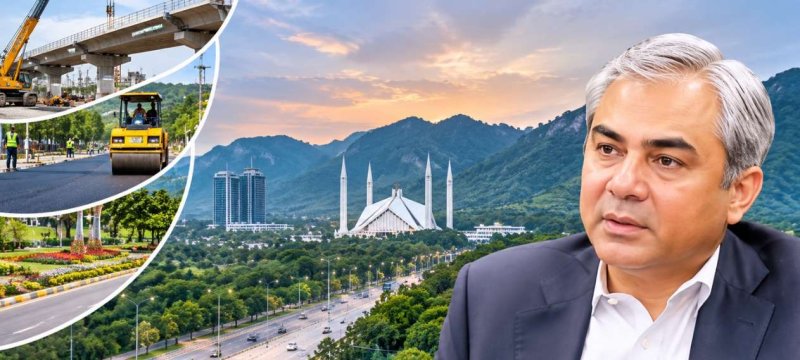
Islamabad is entering a new phase of urban development. Roads are being upgraded, underpasses and flyovers are changing traffic patterns, and new infrastructure projects are gradually reshaping the federal capital. Among the figures associated with this development drive is Federal Interior Minister Mohsin Naqvi, whose approach has placed considerable emphasis on speed, deadlines and direct supervision.
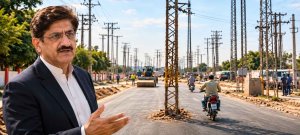
What makes his approach particularly noticeable is his involvement in monitoring development projects. Rather than relying entirely on official briefings, Naqvi has frequently visited construction sites, reviewed progress and directed the concerned departments to meet their deadlines. His working style reflects an emphasis on moving projects from announcements towards practical completion.
A Focus on Delivering Projects on Time
One of the most prominent examples of this approach is the Serena Chowk Interchange, officially known as Jinnah Square. The project was completed in just 72 days, significantly faster than the original estimated construction period. It included three underpasses and connecting roads designed to improve traffic movement around an important junction of the capital.
The project demonstrated what coordinated efforts, continuous monitoring and round-the-clock construction work could achieve. Prime Minister Shehbaz Sharif also appreciated the speed of its completion and acknowledged the contributions of Mohsin Naqvi, the CDA chairman and the project team.
Another example is the Iqbal Chowk Flyover, which was completed in 77 days. Construction formally began on September 19, 2025, and was completed on December 5. The project was designed to improve connectivity between Islamabad and Rawalpindi and facilitate thousands of daily commuters.
These projects have helped establish a visible pattern of deadline-oriented construction in the capital. (Dawn, February 5, 2025; Ministry of Information and Broadcasting, December 19, 2025.)
A Hands-On Approach Towards Islamabad
Naqvi’s approach towards Islamabad’s development has also involved regular inspections and coordination with the Capital Development Authority (CDA). He has emphasised that public projects should not remain delayed for years and that departments must take responsibility for their timely completion.
His development priorities extend beyond roads and interchanges. Improvements to the Diplomatic Enclave, tourism facilities, public spaces, housing sectors and other civic infrastructure have also featured in development discussions.
The emphasis on modern infrastructure is particularly important for a capital whose population and transportation requirements have grown considerably. Islamabad needs better connectivity, improved public facilities and infrastructure capable of supporting its future population.
Development With Beauty and Greenery
Modernisation should not mean sacrificing Islamabad’s natural identity. The city’s greenery, parks and beautiful surroundings are among its greatest attractions.
Encouragingly, infrastructure development can also be accompanied by beautification. The Jinnah Square project, for example, included landscaping and plantation around the interchange. More recently, the Iqbal Chowk Flyover project was also accompanied by the plantation of more than 3,000 trees and plants, according to the government announcement.
This combination of infrastructure and environmental improvement should remain an important part of Islamabad’s future planning.
The Road Ahead
Every development project must ultimately be judged by its construction quality, public benefit and long-term maintenance. Completing a project quickly is an achievement, but ensuring that it serves citizens effectively for many years is equally important.
Mohsin Naqvi’s emphasis on field inspections, administrative coordination and strict deadlines has brought a noticeable focus on the speed of infrastructure delivery in Islamabad. The contributions of CDA officials, engineers, contractors and workers have also been essential to these achievements.
Islamabad deserves a development approach that looks beyond temporary improvements and focuses on long-term progress. Better roads, modern buildings, improved public facilities and protected green spaces can work together to create a more functional capital.
The real test of development is not simply how quickly a project is completed, but how much it improves the everyday lives of citizens.
Islamabad is not just Pakistan’s capital; it is the country’s identity. Its development deserves vision, commitment and timely action.