


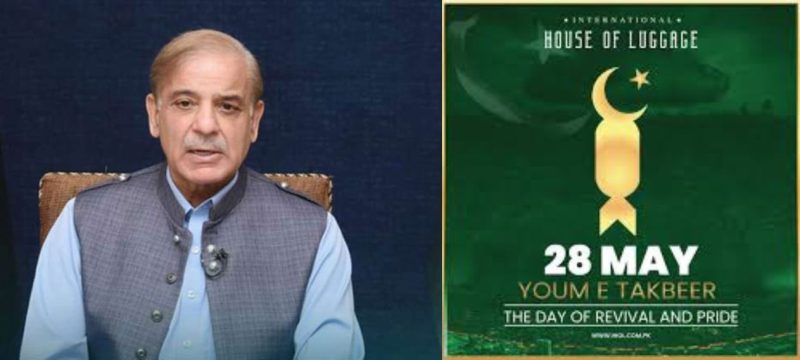
On Youm-e-Takbeer, Prime Minister Shehbaz Sharif commemorated Pakistan’s milestone of becoming a nuclear power in 1998, describing the day as a powerful emblem of national unity, sovereignty, and determination.
He praised the courageous stance of then-Prime Minister Nawaz Sharif, who, despite facing international pressure and the threat of sanctions, went ahead with six nuclear tests in May 1998. These tests firmly established Pakistan’s nuclear capability and fortified its territorial security.
Read more: Celebrating Pakistan’s Nuclear Triumph – 27th Youm-e-Takbeer
“Nawaz Sharif embodied the collective will of the people,” said PM Shehbaz, acknowledging the vital roles played by political leaders, scientists, and the military in realizing the nuclear dream.
He underlined that Youm-e-Takbeer symbolizes not only nuclear success but also a strategic victory against Indian hostility from May 6 to 10, 1998. The Prime Minister remarked that the call of “Allahu Akbar” from Chagai’s mountains still resonates as a symbol of Pakistan’s unwavering resolve.
Paying respects to the visionaries of the nuclear project, he named Zulfikar Ali Bhutto and Dr. Abdul Qadeer Khan, as well as the armed forces and institutions that protected and advanced Pakistan’s defense capabilities.
He emphasized that this achievement was made possible through national sacrifices, relentless effort, and deep faith. PM Shehbaz also connected the significance of the day to Quaid-e-Azam Muhammad Ali Jinnah’s legacy, portraying it as part of the broader Muslim struggle in the Indian subcontinent that led to Pakistan’s formation.
He concluded by reinforcing the message that the country’s power stems from the perseverance of its people and its military. “We renew our vow to safeguard our freedom and transform Pakistan into an economic powerhouse,” he affirmed.