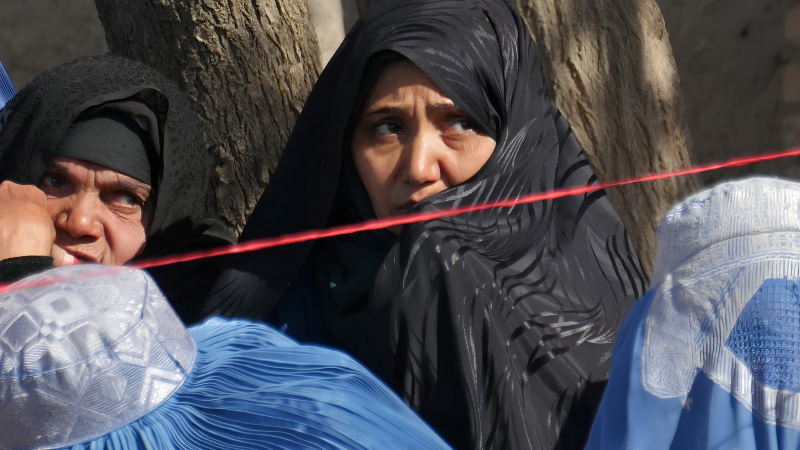
For years, the restrictions on Afghan women have been described as separate policies: restrictions on education, employment, movement and healthcare. But what happens when those restrictions begin to intersect?
A November 12 report by Zan Times and The Guardian describes a de facto ban on male doctors treating female patients spreading across Afghanistan. There is no publicly announced nationwide decree. Instead, doctors describe verbal instructions, threats, inspections and raids. In some provinces, male doctors have reportedly been told not to examine women at all. Others can only do so under conditions, such as the presence of a male guardian or female medical staff.
The distinction between an official order and an enforced practice may matter politically. For a woman who cannot see a doctor, it makes little difference.
First, There Were No Women Doctors
In December 2024, the Taliban shut women out of medical education, closing medical institutes to female students. The decision affected the training of future doctors, nurses and midwives.
Now, reports suggest that male doctors are also being prevented from treating women in parts of the country. The result is a healthcare system in which women are increasingly excluded from both sides of the consultation room.
A surgeon with 15 years of experience at a state hospital in northern Afghanistan told journalists that restrictions on examining women applied even to simple procedures and critical cases. Dentists have described raids and threats of imprisonment if female patients are found in their clinics. Some hospitals have reportedly stopped hiring women altogether.
In one account, a patient was left waiting because the clinic had no female staff. The doctor needed another woman and her male guardian to arrive before treatment could proceed.
Zan Times and The Guardian report.
A Healthcare System With Fewer and Fewer Women
The consequences are not limited to individual clinics. Afghanistan already has a severe shortage of female medical professionals.
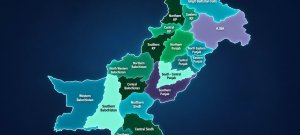
According to Afghanistan International, Helmand, Zabul and Uruzgan have no female specialists, while Kandahar has only three. The UN Special Rapporteur on human rights in Afghanistan, Richard Bennett, has warned that restrictions on medical education are cutting off the pipeline needed to replace women already working in healthcare. He has described the restrictions as an “institutionalised system of gender discrimination.”
The restrictions extend beyond the doctor-patient relationship. Women have reportedly been turned away from health facilities for arriving without a male guardian. In some areas, even ambulance access has become difficult without one.
The consequences were particularly visible after the 2025 earthquake. The World Health Organization reported that around 90% of medical staff in affected areas were men, with the few women among them largely working as nurses and midwives.
Reuters report on the WHO warning.
What Does This Mean for Women Who Need Medical Care?
Afghanistan’s maternal healthcare system was already under immense pressure. Its maternal mortality ratio is estimated at 638 deaths per 100,000 live births, among the highest in the world. Only one in four pregnant women receives the recommended four or more antenatal visits.
UNICEF has warned that Afghanistan could lose thousands of female health workers by 2030. The loss of female doctors and midwives could contribute to an estimated 1,600 additional maternal deaths and more than 3,500 infant deaths.
These are not abstract consequences of policy. They concern women who need prenatal check-ups, patients requiring surgery, girls experiencing medical emergencies and mothers giving birth in a country where access to qualified care is already limited.
The Lancet’s maternal mortality research | RFE/RL on maternal healthcare.
Is This a War on Women?
The Taliban say they respect women’s rights under their interpretation of Islamic law. The Health Ministry has also claimed that healthcare access has improved since the group’s return to power, while offering maternal-death figures that differ sharply from international estimates.
But the practical effect of the restrictions is difficult to separate from their cumulative impact. Women have been excluded from medical training, female health workers face growing restrictions, and male doctors are reportedly being prevented from treating female patients.
The absence of a published nationwide order does not make the consequences any less real. It can, however, make the restrictions harder to challenge and leave doctors and patients uncertain about what they are permitted to do.
A woman who cannot access a female doctor, cannot be examined by a male doctor and cannot travel without a male guardian is left with fewer and fewer options.
Perhaps the question is not whether each individual restriction amounts to a war on women. It is what to call a system in which women are steadily losing access to education, employment, independence and, increasingly, healthcare.
And what happens when getting medical treatment becomes another privilege women are not allowed to have?
References
- Zan Times: Afghan women told to go home after de facto ban on male doctors treating them
- UNN: Taliban restrictions on male doctors treating women
- The New York Sun: Afghan women can’t become doctors
- U.S. News / Reuters: Women at risk as Taliban curbs hit Afghan healthcare
- Feminist Majority Foundation: Gender segregation in hospital operating rooms
- The Lancet: Maternal mortality in Afghanistan
- RFE/RL: Afghanistan’s maternal mortality crisis
- Reuters: WHO urges Taliban to lift healthcare restrictions