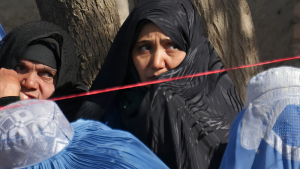
Pakistan has reported 3,172 cases of gender-based violence in the first half of 2026 alone, and 644 of these were reported murder cases. Maybe our hearts have hardened enough not to see it as a large number, but 644 women were killed simply for being women.
132 of these were honour killings. Across all the cases, 27 percent of the alleged perpetrators were acquaintances of the victim and 13 percent were husbands, and more than half of the incidents (54 percent) took place in the victim’s own home.
Social media humanitarians and feminists have dubbed it the “year of femicides,” but in the global village, awareness of female rights has undeniably reached Pakistan. Is it the “year of feminists?” The rising numbers will say so.
Are the Numbers Rising, or Are We Finally Counting?
The figures do rise, but what they measure matters. The NGO Sahil counts cases reported in the media: its report collects data published in 81 national newspapers. By that count, gender-based violence cases went from 5,253 in 2024 to 7,071 in 2025, an increase of 34 percent. That includes 1,546 murders and 284 honour killings.
That could mean more violence, more reporting, or both. Sahil itself says that Punjab accounts for 78 percent of cases partly because of comparatively active reporting mechanisms, and that many incidents still go unreported. The Human Rights Commission of Pakistan recorded at least 470 honour killings in 2025, 16 percent more than in 2024. Murders are harder to hide than harassment, so a rise in killings is less likely to be explained by reporting alone.
The 2026 half-year figure doesn’t settle it either. 3,172 cases in six months works out to roughly 6,300 for the year, which is not obviously higher than 2025. Both labels, “year of femicide” and “year of awareness,” may be true at once.
Sati and Karo-Kari: Different Names, Same Logic
But sociocultural nuances will show differently. The most common example cited in Pakistan is the now-abolished Hindu tradition of “sati,” in which a widow was expected to burn herself on her husband’s funeral pyre. The word is a lesser-known fact in itself: in Sanskrit, sati means a “good woman” or “virtuous woman,” derived from sat, meaning goodness or virtue. British India banned the practice in 1829 under Governor-General Lord William Bentinck, but it did not simply end: cases continued through the 20th century, which led to India’s Sati Prevention Act in 1988.
How is honour killing, “karo kari,” different? Many will argue that the difference is that in this scenario the woman is sinful and unchaste. In a society where married women were killed to preserve their chasteness after their husband died, and unmarried women are killed when their chasteness comes into question, can’t we argue that femicide is woven into our culture no matter what narrative we attach to it?
The vocabulary shows how widespread the idea is. These killings are called “kala kali” in Punjab, “karo kari” in Sindh, “tor tora” in Khyber Pakhtunkhwa, and “siyah kari” in Balochistan. The Human Rights Commission of Pakistan reported 15,222 honour killings across the country between 2004 and 2016. Whatever the region, the logic is the same: the woman’s body belongs to the family’s honour, and the family may end her life to protect it.
The Law Changed. Did the Culture?
In 2016, after the murder of social media star Qandeel Baloch by her brother, parliament passed a law mandating life imprisonment for honour killers even if the victim’s relatives forgive them. Before that, families could pardon the killer under the diyat laws, and murderers often walked free within months.
The reform closed a loophole, but not the problem. Trials are slow, witnesses are often relatives, and weak enforcement persists. Qandeel Baloch’s own brother, who was sentenced to life, was later acquitted. Sahil’s latest report also points to extremely low conviction rates, delays in investigation and judicial processes, and poor quality of evidence. A law that exists on paper cannot undo centuries of the idea that a woman’s life is conditional.
So, Which Is It?
If this is the year of femicide awareness, awareness has to mean more than counting. Sati ended in law long before it ended in culture, and it took more than a century of reform to make it unthinkable. Honour killing is on a similar road. The numbers tell us that women are being killed. Whether they tell us that more women are being killed, or that we are finally listening, is a question we can only answer by what we do next.
References
VoicePK: Sahil report, January–June 2026
The News: Punjab emerges as GBV hotspot
The Nation: The Missing Shield
Sentinel Assam: Pakistan reports big rise in gender-based violence (Sahil)
Kashmir English: GBV cases reach 5,253 in 2024
The Express Tribune: 25% rise in gender-based violence
Voice of Pakistan Minority: Pakistan’s honor killing crisis in 2026
University of Nottingham: Sati, women, widow immolation
Loksujag: Cycle of silence, increasing honour killings in Pakistan
Al Jazeera: Pakistan adopts new law to tackle honour killings