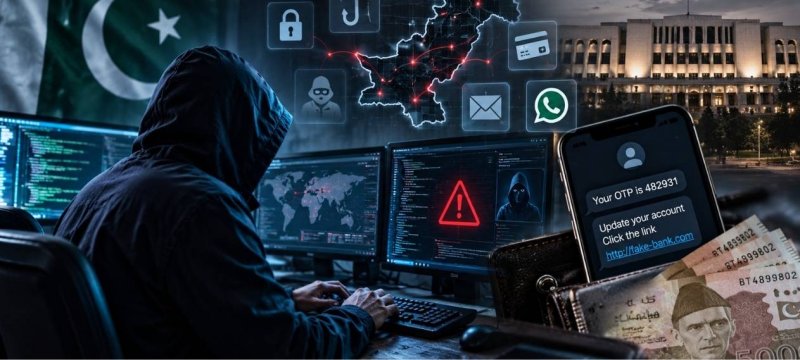
More than 227,000 Pakistanis have reported major financial losses from online scams during the past three years.
Reported losses from Cyber Fraud reached Rs. 8.32 billion during the period. Serving and former parliamentarians were also among the victims.
According to available documents, the National Cyber Crime Investigation Agency received 227,757 complaints during the three-year period.
The agency recorded 83,080 complaints in 2024. Another 76,646 complaints were received in 2025.
The following year saw 68,031 complaints, showing that online financial scams remained a serious concern.
Officials believe the actual number of victims could be much higher. Many people reportedly avoid filing complaints after losing smaller amounts.
Some unreported losses are believed to range between Rs. 2,000 and Rs. 20,000.
Lawmakers Also Targeted by Cybercriminals
The documents show that Cyber Fraud was not limited to ordinary citizens.
Six serving and former parliamentarians reportedly lost a combined Rs. 2.749 million in different incidents.
Former MNA Sahibzada Hamid Raza reportedly lost Rs. 490,000. Senator Falak Naz Chitrali suffered a reported loss of Rs. 485,000.
Senator Bilal Ahmed Mandokhail reported losing Rs. 403,500. Khyber Pakhtunkhwa MPA Shehla Bano reportedly lost Rs. 370,800.
A former MPA was also reportedly defrauded of Rs. 970,000.
The NCCIA recovered more than Rs. 918,000 for three senators. They were Falak Naz Chitrali, Bilal Ahmed Mandokhail and Niaz Ahmed.
WhatsApp Hacking and Fake Calls Among Common Scams
Several methods are being used by cybercriminals to target citizens.
Common schemes include WhatsApp hacking, impersonation and fraudulent phone calls.
Scammers often pretend to represent banks, government departments or other trusted organizations.
In May 2026, the NCCIA busted a gang accused of hacking mobile phones and WhatsApp accounts.
The suspects allegedly posed as senior government officials and demanded money using false claims.
In another case, suspects allegedly impersonated bank officials to obtain sensitive financial information.
Other reported scams have involved fake investments, prizes, gifts and parcel clearance offers.
Fraudsters have also used stories involving relatives living abroad to convince victims to send money.
NCCIA Issues Cyber Fraud Safety Advice
The NCCIA has urged people to remain cautious as Cyber Fraud continues to affect thousands across Pakistan.
Citizens should never share their OTPs, PINs, passwords or sensitive banking information with unknown individuals.
People should also verify unusual money requests through trusted communication channels.
Suspicious links and unsolicited messages should be avoided, especially when they request personal or financial information.
The agency has also warned about compromised WhatsApp accounts. Criminals can use hacked accounts to request money from a victim’s contacts.
Victims can report cybercrime through the NCCIA’s online complaint system or a Cybercrime Reporting Centre.
The agency also provides helpline 1799 for reporting cybercrime incidents.
In other news read more about: Pakistan Issues Travel Advisory For Overseas Pakistanis Returning Home
The latest figures underline the growing financial impact of online scams in Pakistan. The real scale could be larger because many incidents remain unreported.