

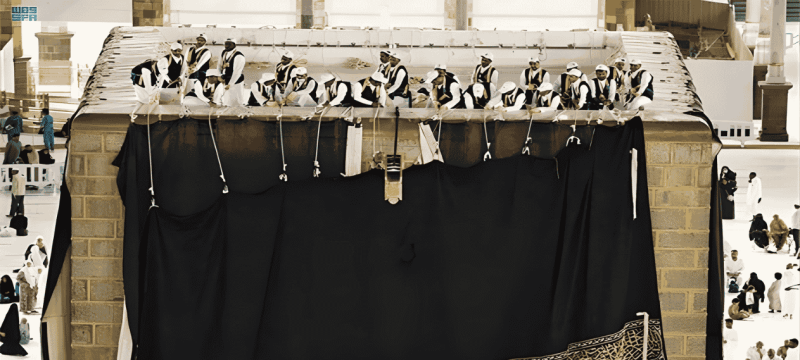
The annual ceremony for replacing the Holy Ka’bah’s Kiswa is scheduled to take place after Isha prayers on June 16. The event will also mark the beginning of 1 Muharram 1448 AH and the Islamic New Year.
This annual ceremony is one of the most significant religious traditions in Islam. It is held at Masjid al-Haram in Makkah and attracts global attention every year.
During the annual ceremony, the old Kiswa covering the Ka’bah is carefully removed and replaced with a new one. A specially trained team carries out this delicate process with strict coordination and care.
The new Kiswa is made from high-quality black silk. It is decorated with Quranic verses embroidered using gold and silver threads. The craftsmanship reflects centuries of tradition and devotion.
Officials in Makkah oversee the entire process to ensure it is completed smoothly and respectfully. The replacement of the Kiswa is considered a deeply symbolic act.
This annual ceremony highlights the importance of preserving Islamic heritage. It also represents renewal, unity, and respect for the holiest site in Islam.
The event takes place every year as part of a long-standing tradition. It connects modern practices with historical religious customs that have been followed for generations.
Large teams work behind the scenes to prepare the new Kiswa. Each section is carefully designed and stitched before being installed on the Ka’bah.
The timing of the annual ceremony is closely linked with the Islamic calendar. It coincides with the start of Muharram, marking a new spiritual year for Muslims worldwide.
Pilgrims and visitors in Makkah witness the atmosphere surrounding the event, although the process itself is carried out with controlled access for safety and sanctity.
Authorities ensure that all steps are completed with precision. The replacement symbolizes devotion and respect for the sacred house of Allah.
As the new Kiswa is placed, the annual ceremony reflects a moment of renewal and spiritual reflection for the global Muslim community.
The tradition continues to remain one of the most respected rituals in Islam, combining faith, history, and craftsmanship in a single sacred event.
In other news read more about: Imam e Kaaba performs a special Dua in the Holy Mosque for Pakistan