


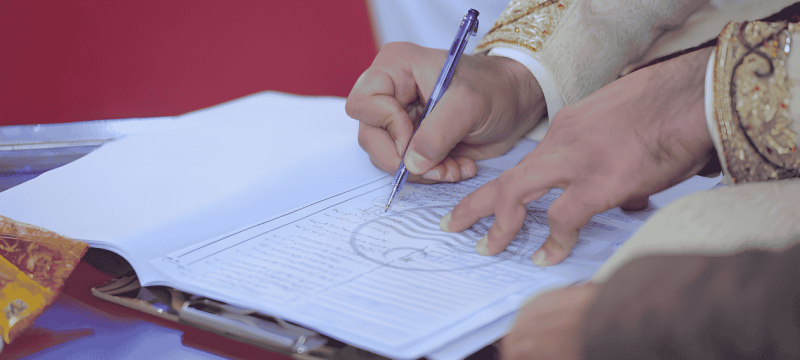
The Lahore High Court (LHC) has ruled that a registered Nikahnama alone cannot prove the validity of a marriage in cases involving allegations of abduction, coercion, or forced marriage. The court said judges must first determine whether both individuals gave their free and voluntary consent.
The judgment highlights that legal documents, including a registered Nikahnama, are not sufficient on their own when the validity of a marriage is disputed. Instead, courts must carefully examine the facts and circumstances surrounding the relationship.
According to the ruling, trial courts should focus on whether both parties entered the marriage willingly. If there are claims of force, pressure, or kidnapping, the existence of official marriage documents cannot automatically settle the matter.
The Lahore High Court emphasized that consent is the most important element in determining whether a marriage is legally valid. Judges have been instructed to look beyond paperwork and assess the complete background of each case.
The ruling directs trial courts to examine how the relationship began and whether both individuals had a genuine understanding before the marriage took place. This approach aims to ensure that decisions are based on evidence rather than documents alone.
The court observed that a registered Nikahnama may serve as an official record of a marriage, but it cannot replace the legal requirement of free and voluntary consent. Where consent is challenged, courts must evaluate all available evidence.
The judgment is particularly relevant in cases involving allegations of forced marriage or abduction. In such matters, the court said it is essential to determine whether either party acted under pressure or against their will.
According to the ruling, judges should carefully review witness statements, supporting evidence, and the circumstances leading to the marriage. Every disputed case should be examined on its own facts.
Legal experts believe the decision reinforces the principle that marriage under Pakistani law must be based on mutual agreement. They note that consent remains a fundamental requirement regardless of whether official documents have been completed.
The court also stressed that trial courts should avoid relying only on documentary evidence. Instead, they must conduct a thorough examination of the relationship and the events surrounding the marriage.
The judgment is expected to guide lower courts when dealing with similar disputes in the future. It provides clear direction on how cases involving alleged coercion or forced marriage should be assessed.
Lawyers say the ruling may help strengthen legal protections for individuals who claim they were forced into marriage. It also underlines the importance of carefully evaluating each case before reaching a decision.
The Lahore High Court concluded that a registered Nikahnama cannot by itself establish the legality of a marriage where consent is disputed. The decisive factor remains the free and voluntary choice of both parties.
The ruling reinforces that courts must prioritize genuine consent over documentation. Trial courts are now expected to conduct a complete review of the evidence before determining the validity of a marriage in disputed cases.
In other news read more about: Islamabad High Court Allows 15-Year-Old to Live With Husband, Calls for Law Reforms