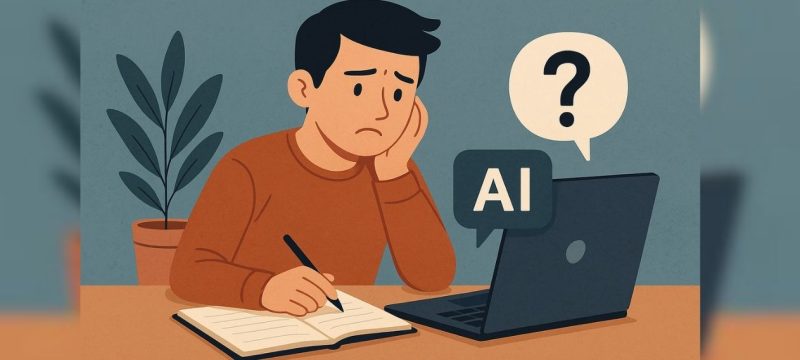
A new study has raised concerns about how artificial intelligence tools affect learning. It suggests that Students who rely heavily on AI may perform better in the short term. However, they could face weaker memory and reduced cognitive skills over time.
The research was published by Social Sciences & Humanities Open. It explored how AI tools impact university-level learning. Popular platforms like ChatGPT, Claude, and Gemini were included in the analysis.
In the experiment, 120 participants were divided into two groups. One group of Students used AI tools during study sessions. The other group followed traditional learning methods without AI help. After completing lessons, both groups were tested again after 45 days.
The results showed a clear difference. Students who used AI scored an average of 57.5 percent. Those who studied without AI achieved a higher average of 68.5 percent. Researchers said this gap highlights the impact of reduced mental effort.
Experts explained this trend using the concept of cognitive offloading. This is when people depend on tools instead of thinking deeply. AI makes learning faster, but it reduces the struggle that helps memory grow stronger.
The study also discussed the idea of “desirable difficulties.” These are challenges that improve long-term understanding. When AI gives instant answers, learners may skip this important process. As a result, knowledge may not stay for long.
Researchers clarified that AI does not directly damage intelligence or creativity. However, they warned that overuse can create dependency. This behavior acts like a “cognitive crutch,” where users depend on technology instead of developing skills.
The findings also point to a shift in learning habits. Many Students may focus more on finding information rather than remembering it. This could change how education works in the future.
In other news read more about BISP Scholarships Help Deserving Students Access Education Across Pakistan
Experts believe that controlled use of AI can still be helpful. Limiting access and guiding usage may help Students benefit without harming their thinking abilities.